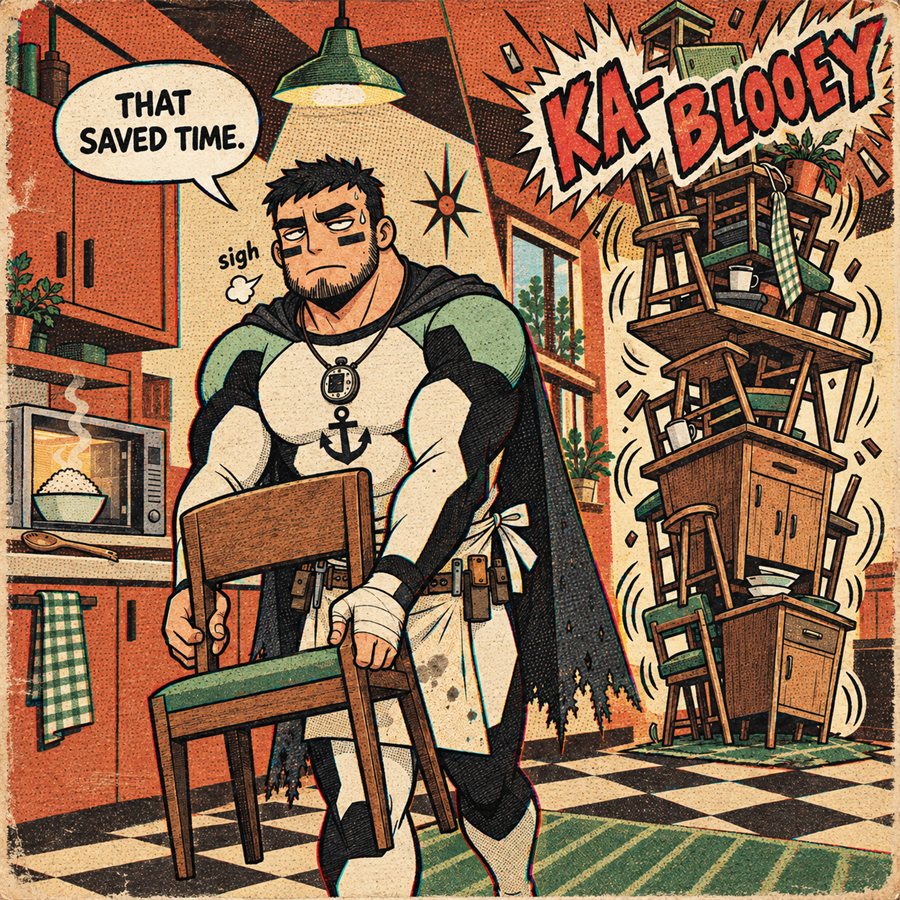
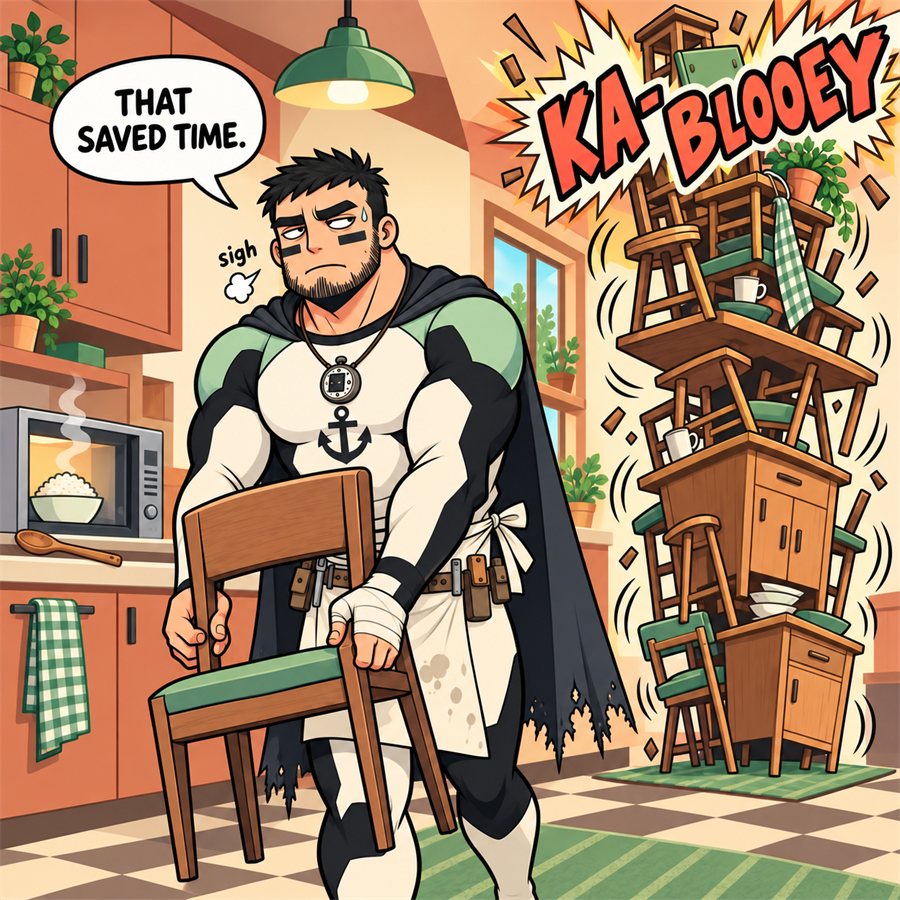
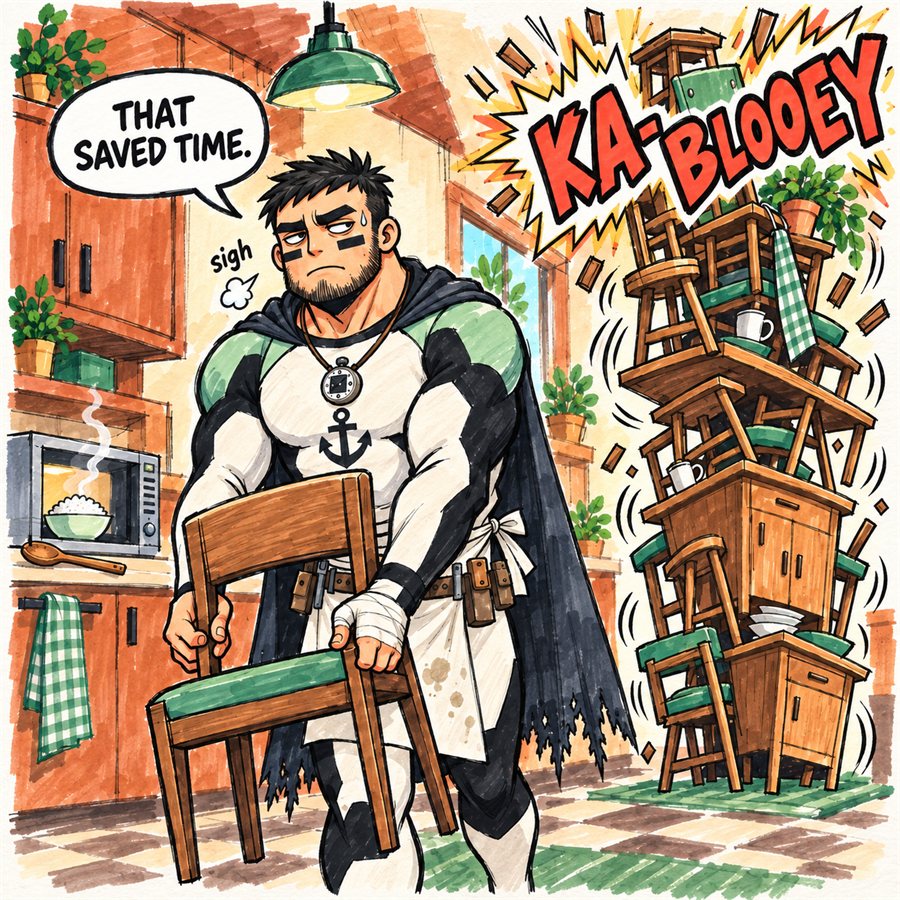
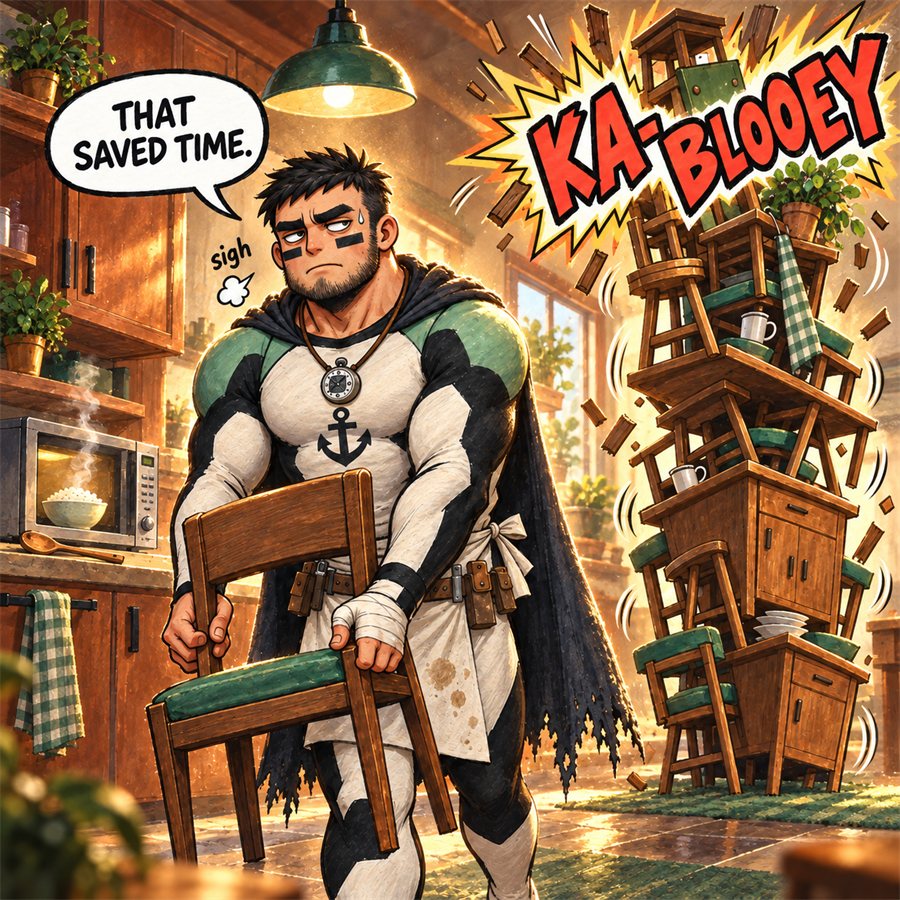
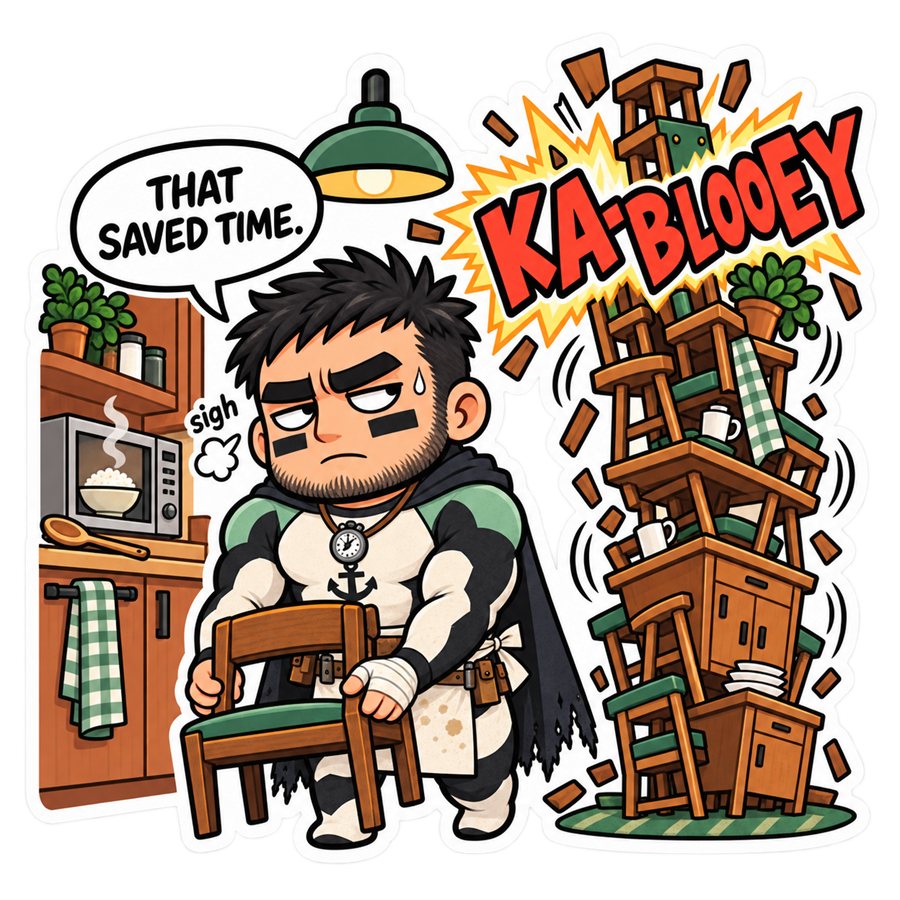
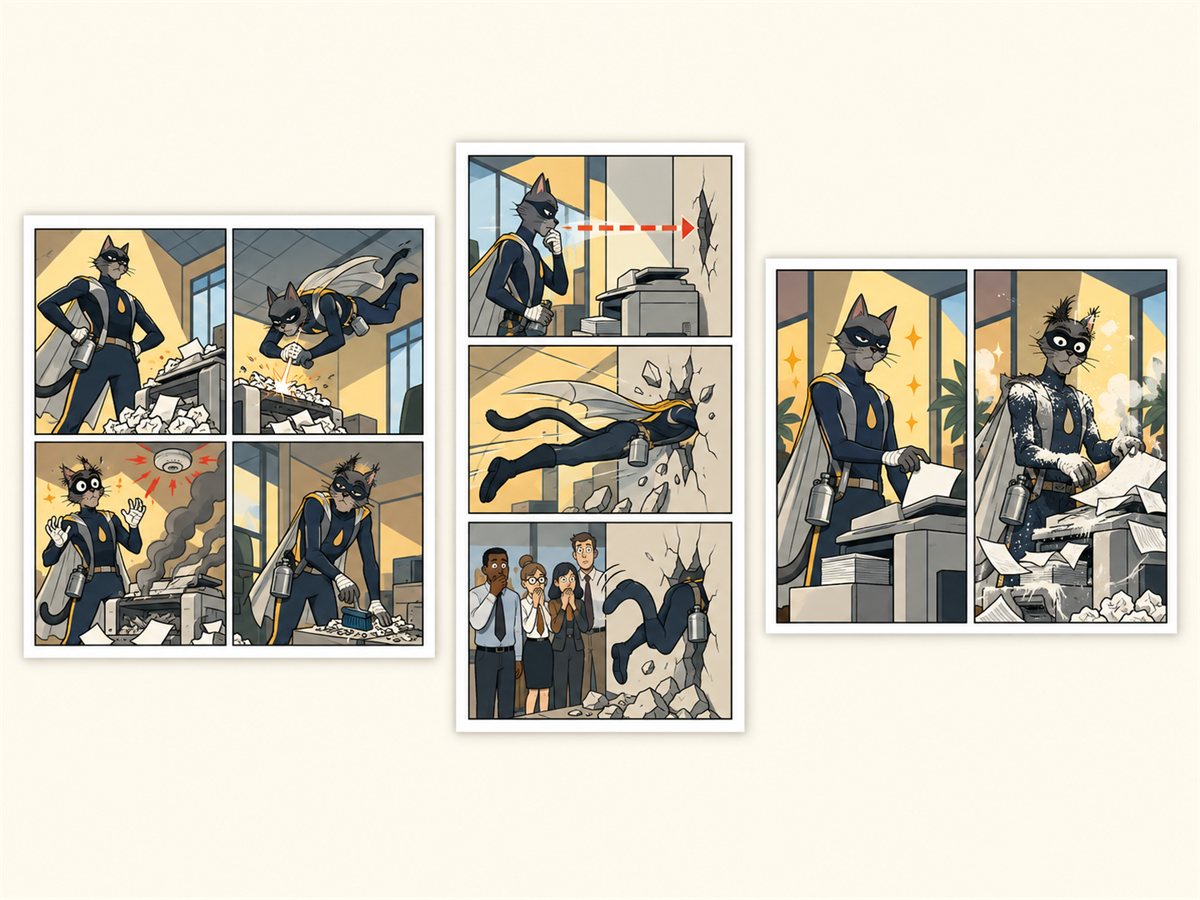
The one thing this does
Sells once. The buyer came for the image, so you compete on the image — against everyone else posting images that day.
Sells again. They came for the hero. They already liked one strip, so the mug, the sticker sheet and the next book are easy sales.
Needs the same face on page 3 and page 30. Without consistency you cannot make one at all — not badly, at all.
Every AI tool can hand you a picture. Almost none can hand you the same character twice. That is the entire job of this app — and the CHARACTER LOCK below is how it does it.
Why this is funny in the first place
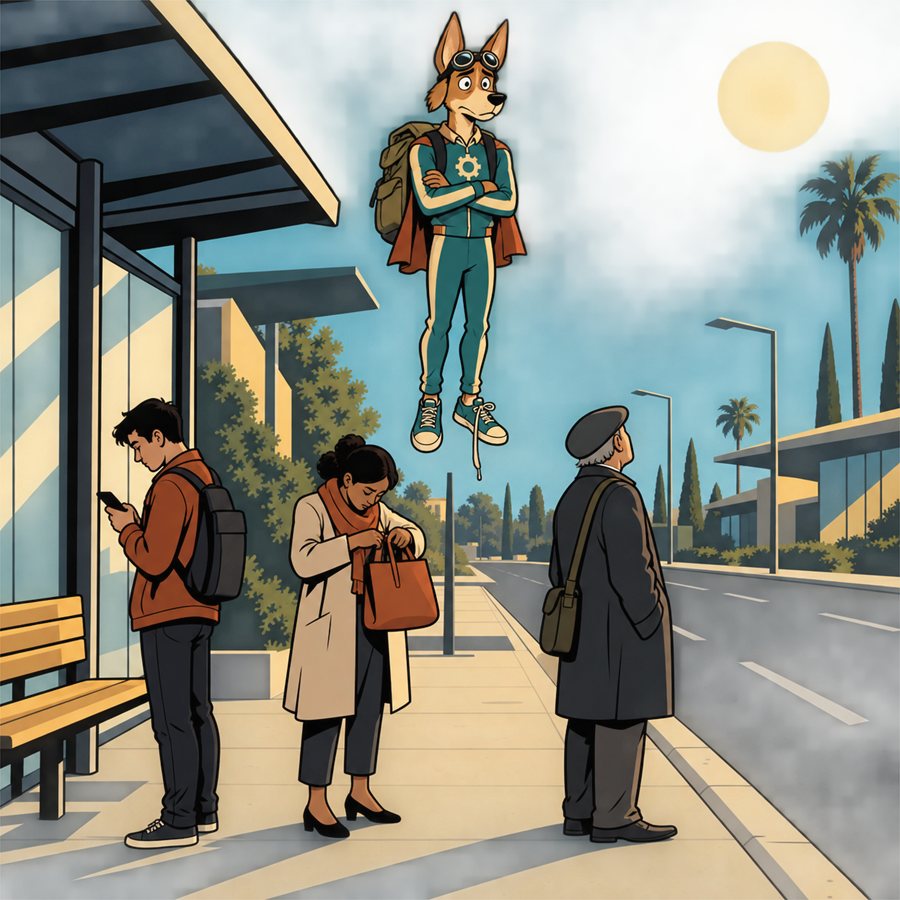
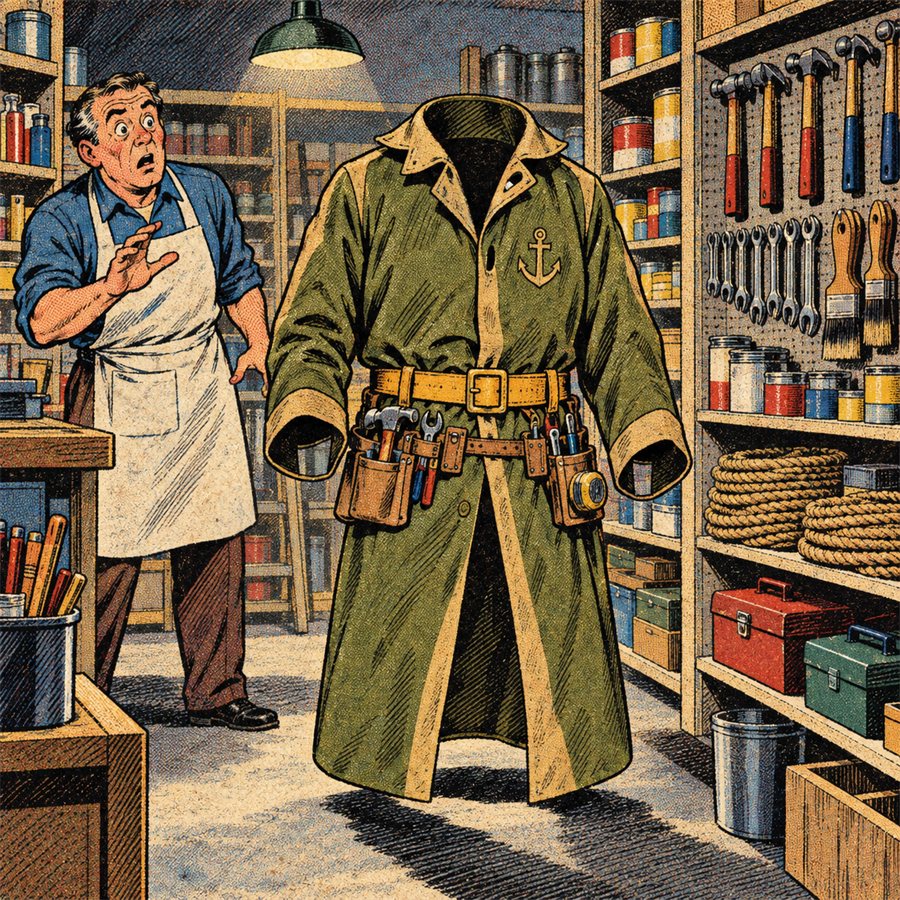
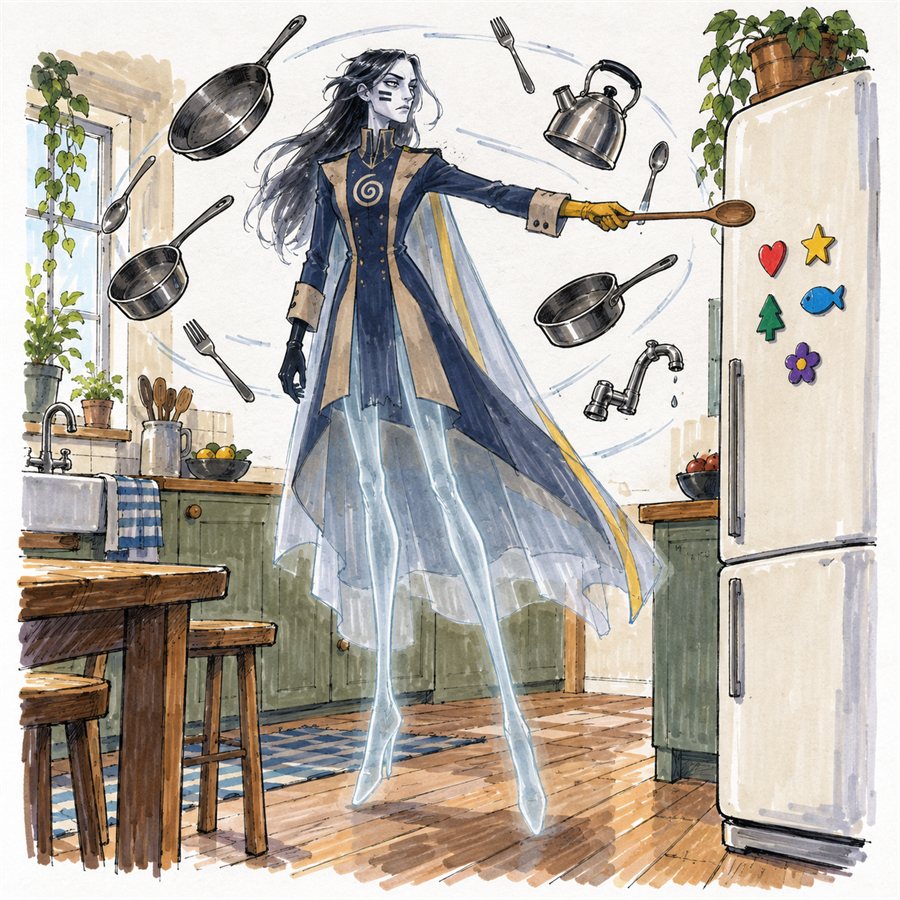
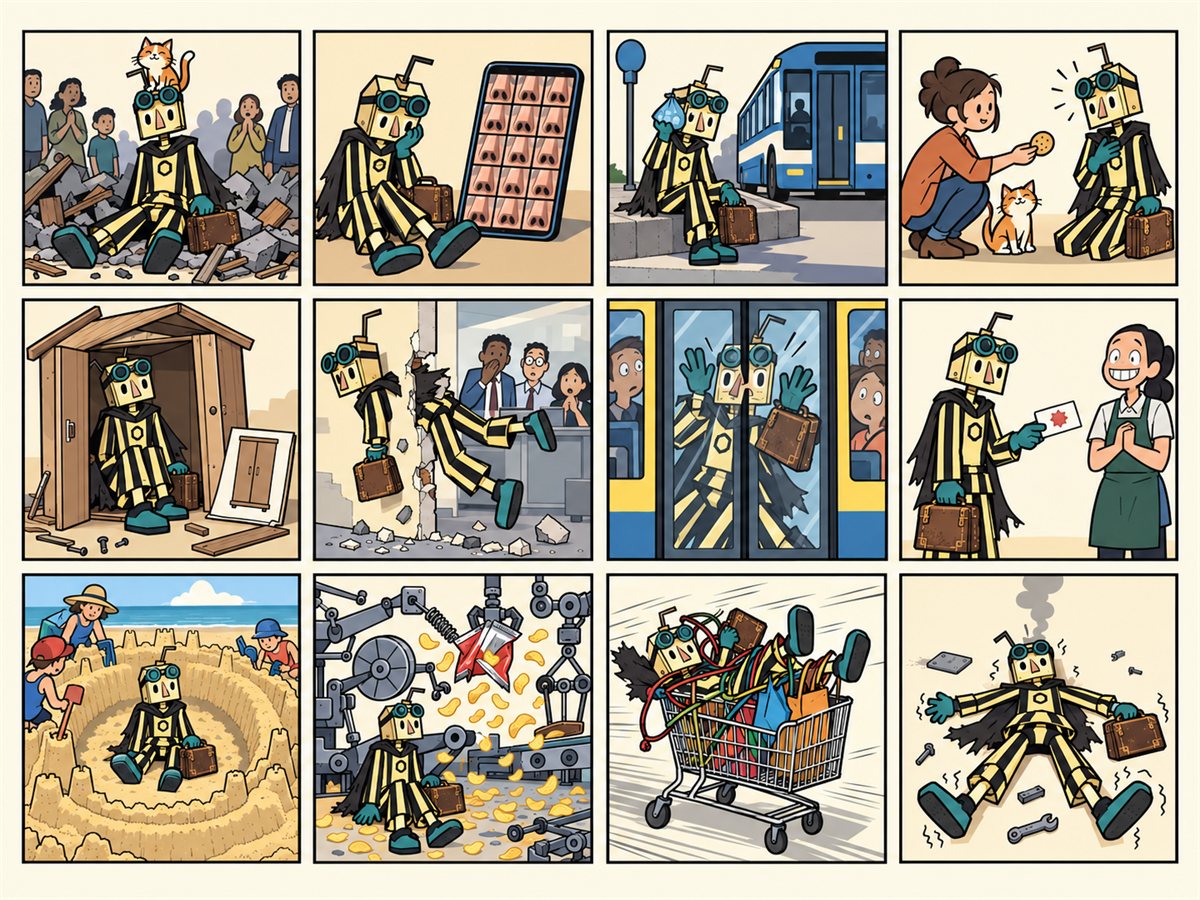
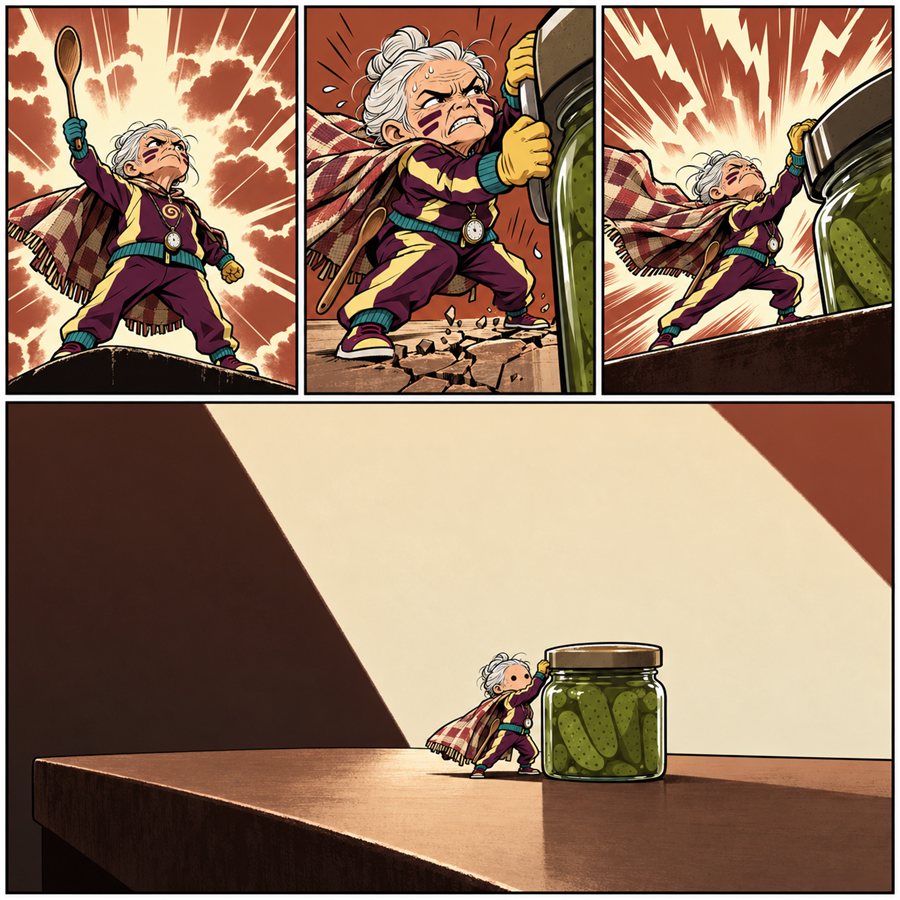
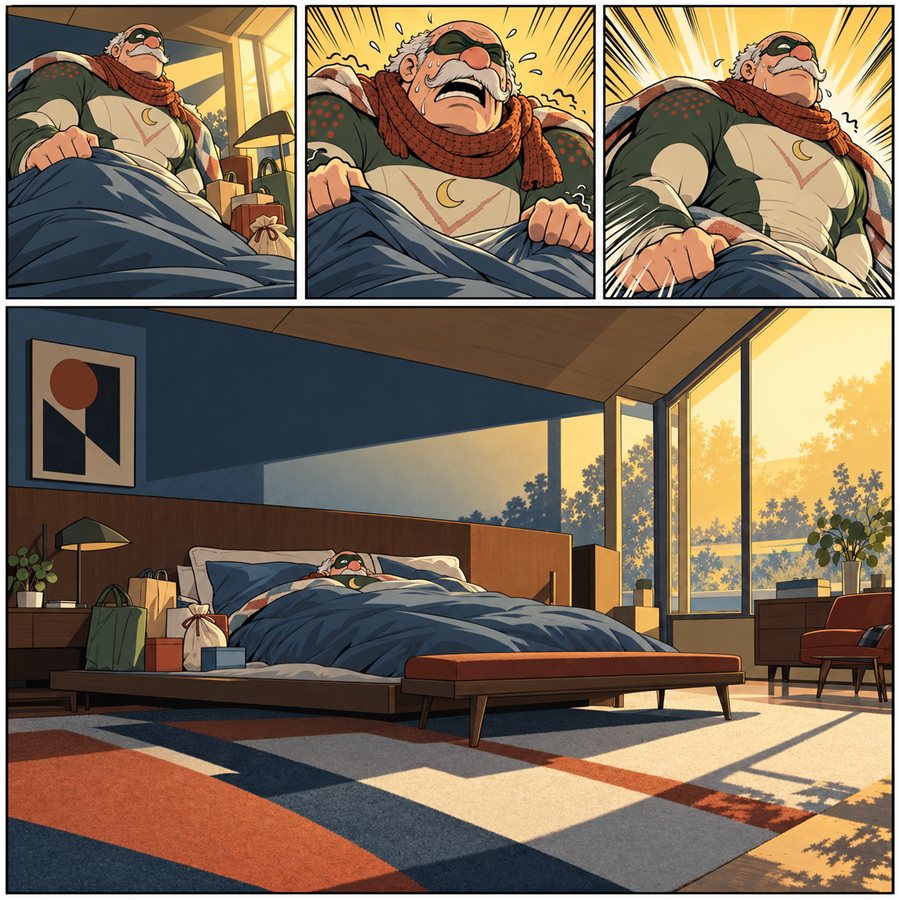
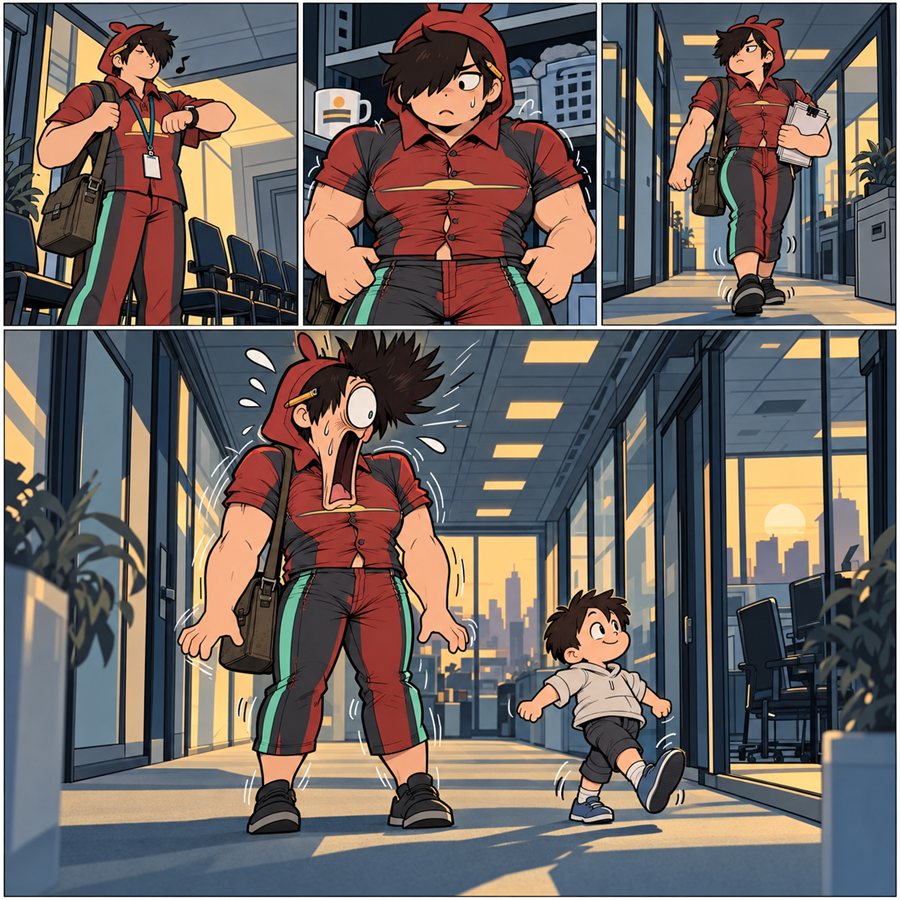
This is the engine room. Nobody laughs at a hero who can fly — they laugh at a hero who can fly only when nobody is watching. Twenty of these ship with the app, and each one writes its own punchline:


…and fourteen more. Every hero you build carries one, and it is the thing that ruins their day in panel three.
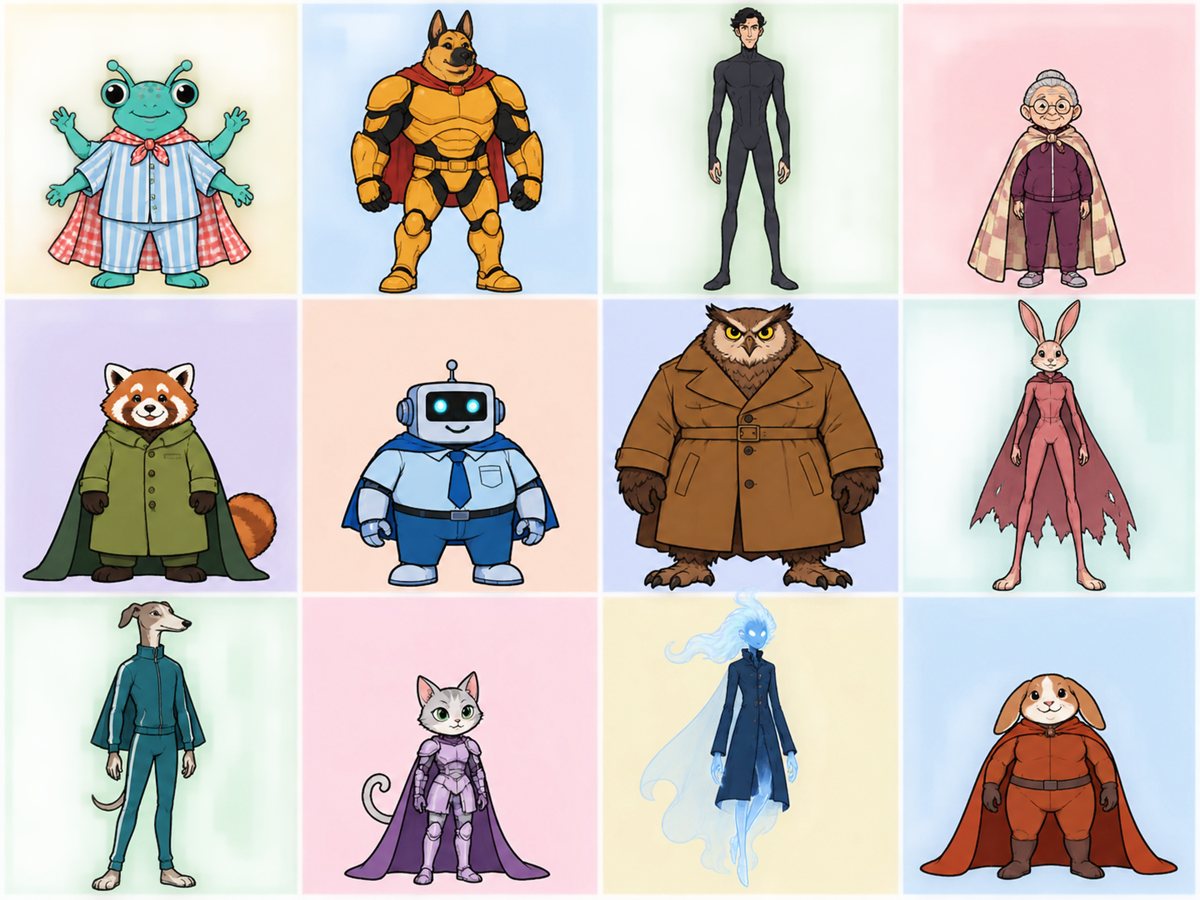
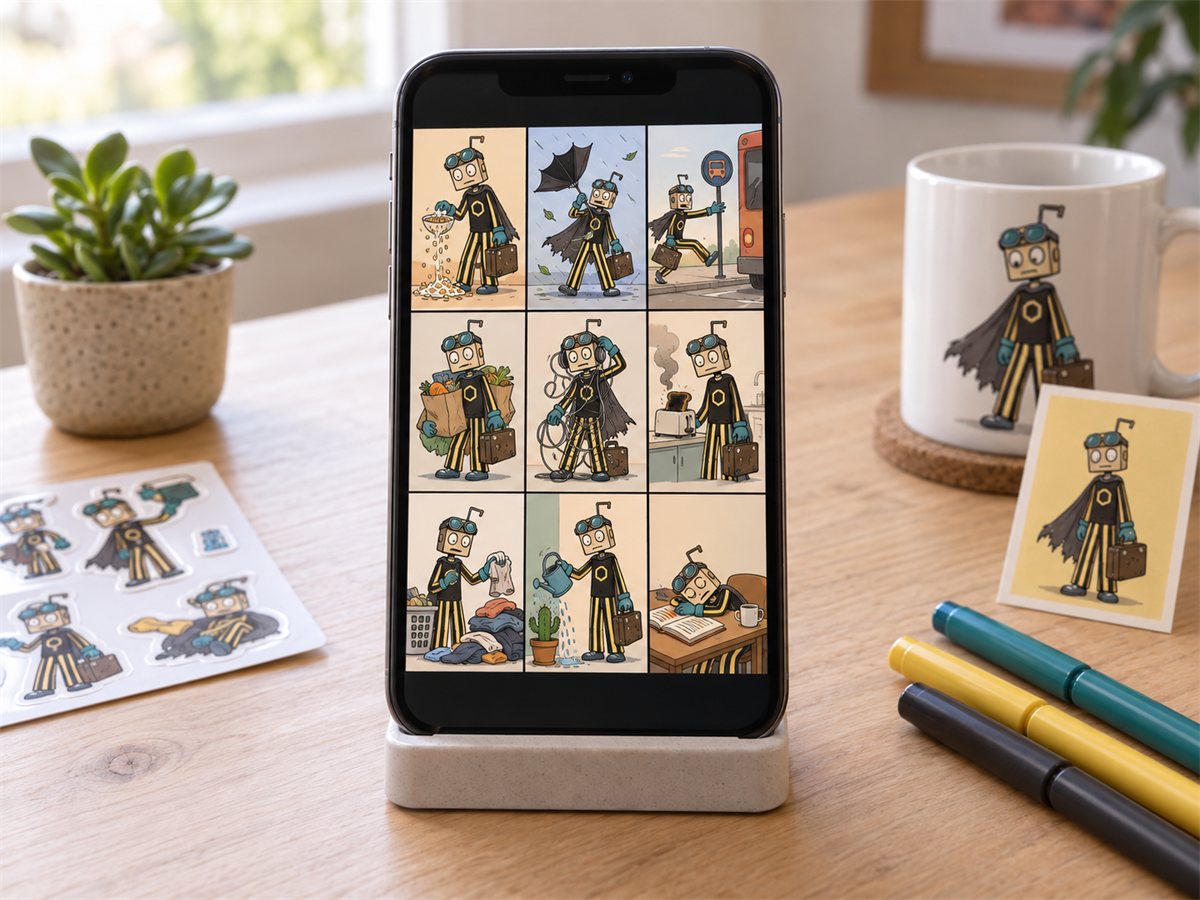
Six limitations, six different characters — an owl, a human, a rabbit, a robot, a pensioner and a red panda. All six were built in this app, from the same lists you get.
And a second, completely useless power on top. Your hero also gets one of these — can hold a conversation with furniture · always knows exactly what time it is · has permanently warm hands · hair that grows with their mood · can see the expiry date on any food · always finds a parking space · can never get a paper cut · knows the exact battery level of any device — thirty in all.
The jokes come from your character
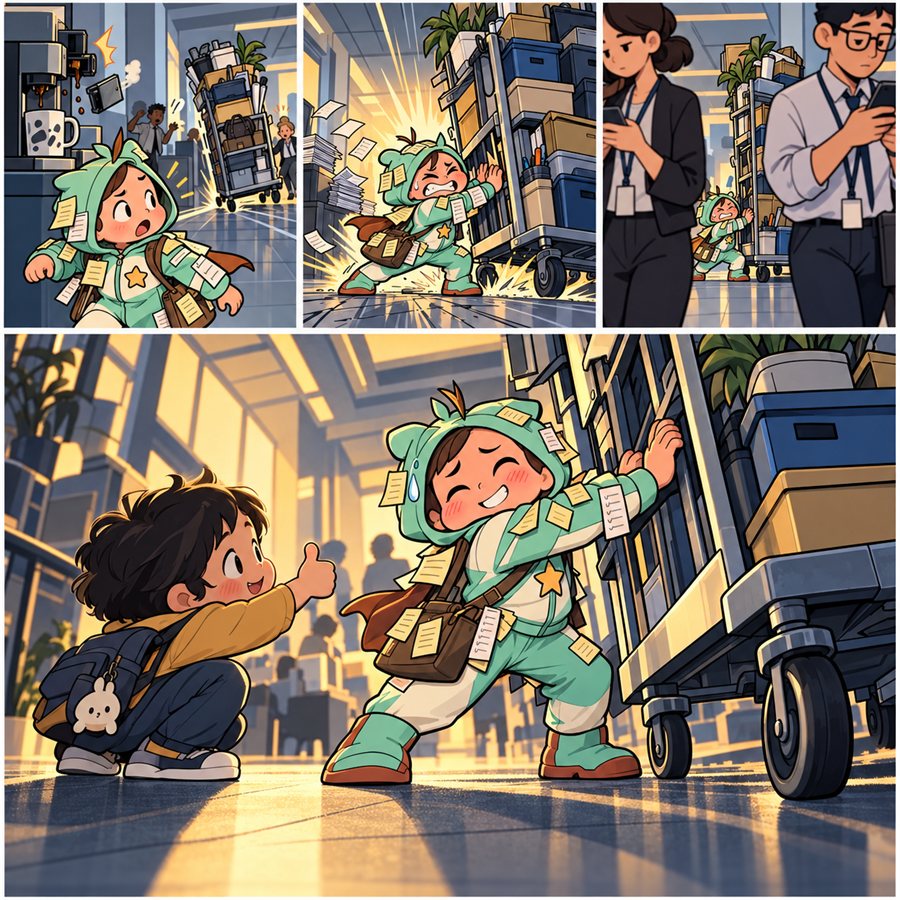
Most tools hand you a blank box and a hundred options. This one reads the hero you built — their day job, their power, their flaw, their secret fear — and builds the joke around them. A librarian's disaster happens in the library. A hero who is anxious about small things turns up covered in sticky notes. Every time.
Forty jobs, each with its own workplace, its own props and four everyday disasters. Pick librarian and the strip happens between tall bookshelves and SILENCE signs — while a phone rings in the silent reading room.
An AI cannot draw “anxious”. So fifteen flaws and twelve secret fears are written as things it can draw — a habit, a reaction, an object. The flaw becomes a running gag across the whole series; the fear shows up exactly when it hurts most.
You never scroll through all 59. The app suggests the four that fit the hero in front of you — and tells you why, in plain words.
Why the strips are actually funny
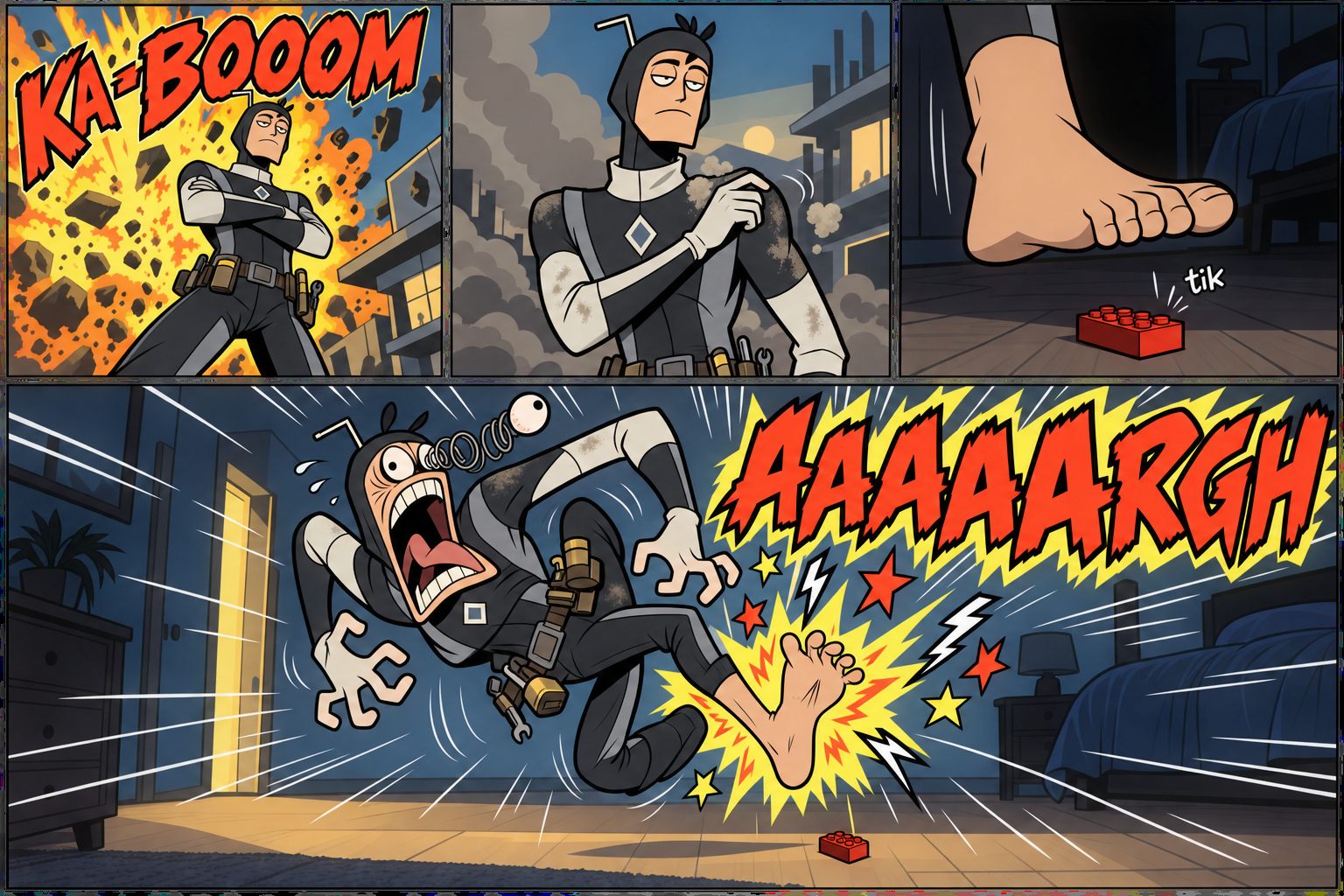
Ask an AI for “a hero defeated by an everyday object” and you get something polite and forgettable. Ask for a plastic toy brick in the dark, one bare foot about to come down on it — and you get a face that explodes. The app never asks vaguely.
Every joke engine carries five or six specific gags. Hit Another gag and the same engine tells a completely different joke — the jar lid, the paper cut, the stubbed toe, the static shock.
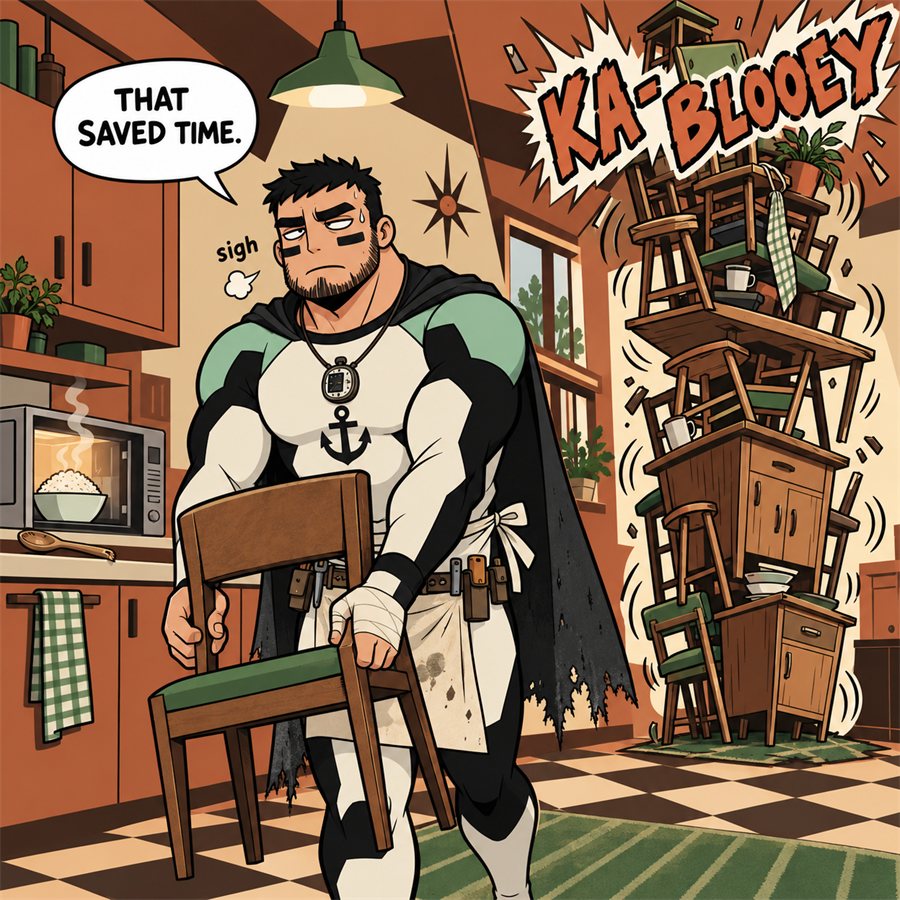
KA-BOOOOM, ZIP ZIP ZIP, CRUNCH, sigh. Each panel gets its own sound effect, lettered big and bold — the language wordless comedy runs on, and short enough that the AI spells it right.
Eyes bulging, jaw on the floor, hair straight up — or a flat deadpan stare when that is funnier. The face may stretch for one panel; the costume, colours and emblem stay exactly as locked.
Where this actually pays
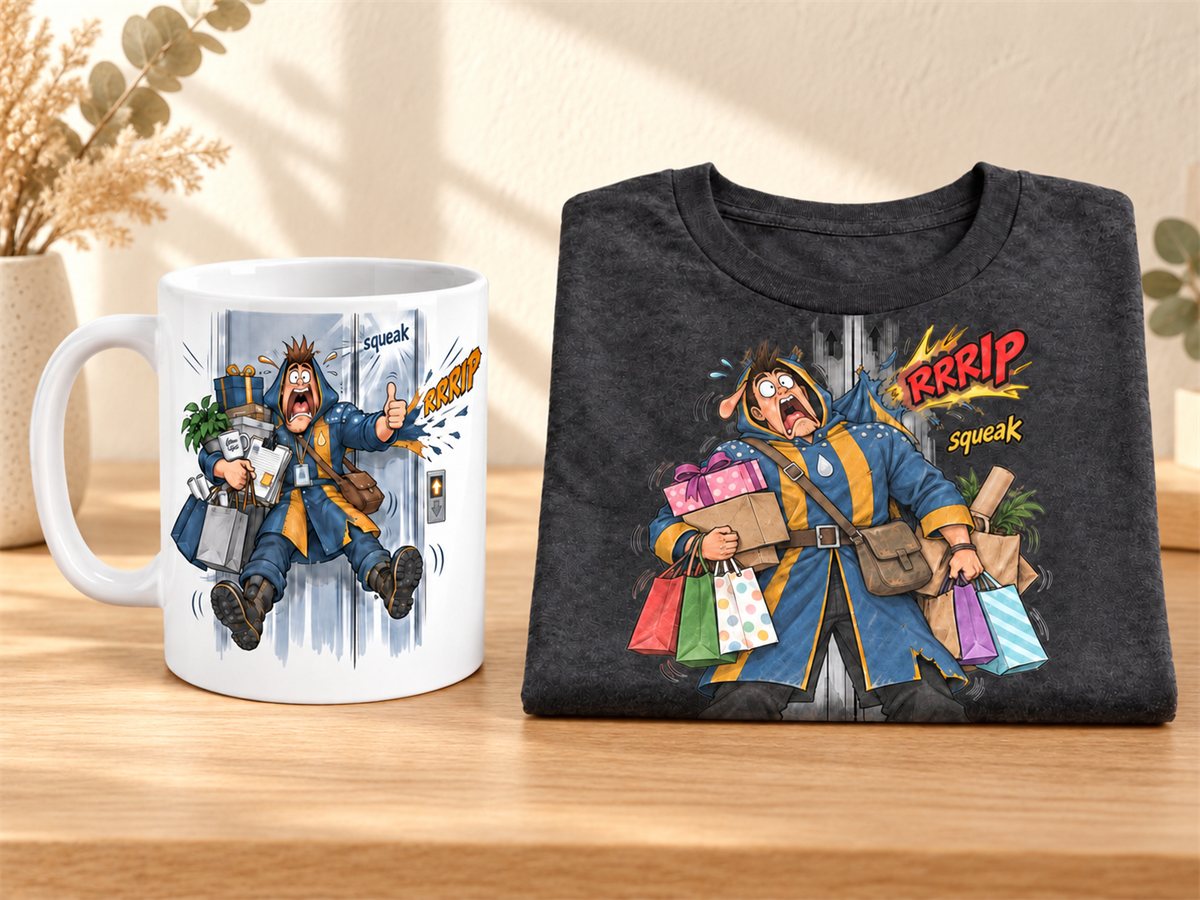
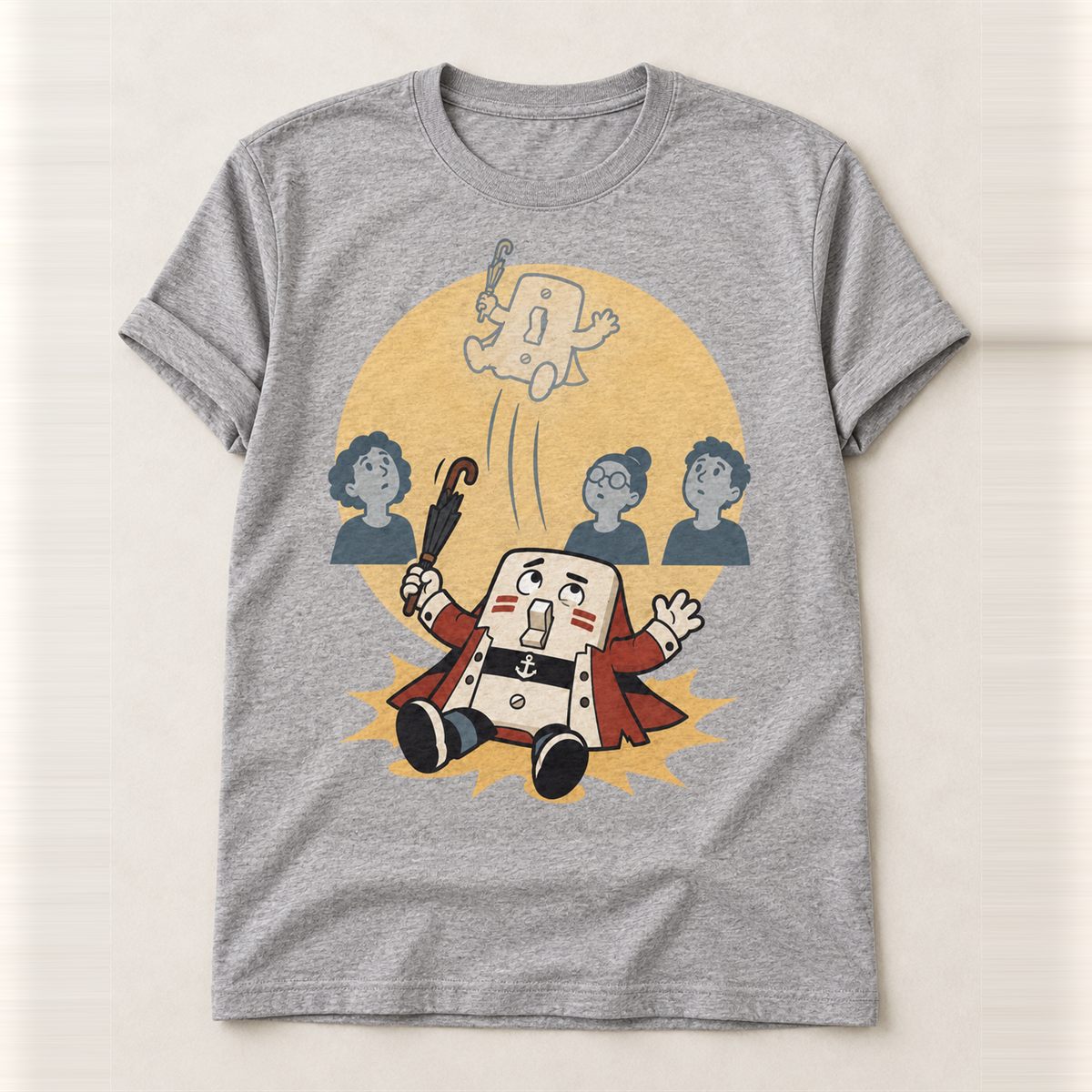
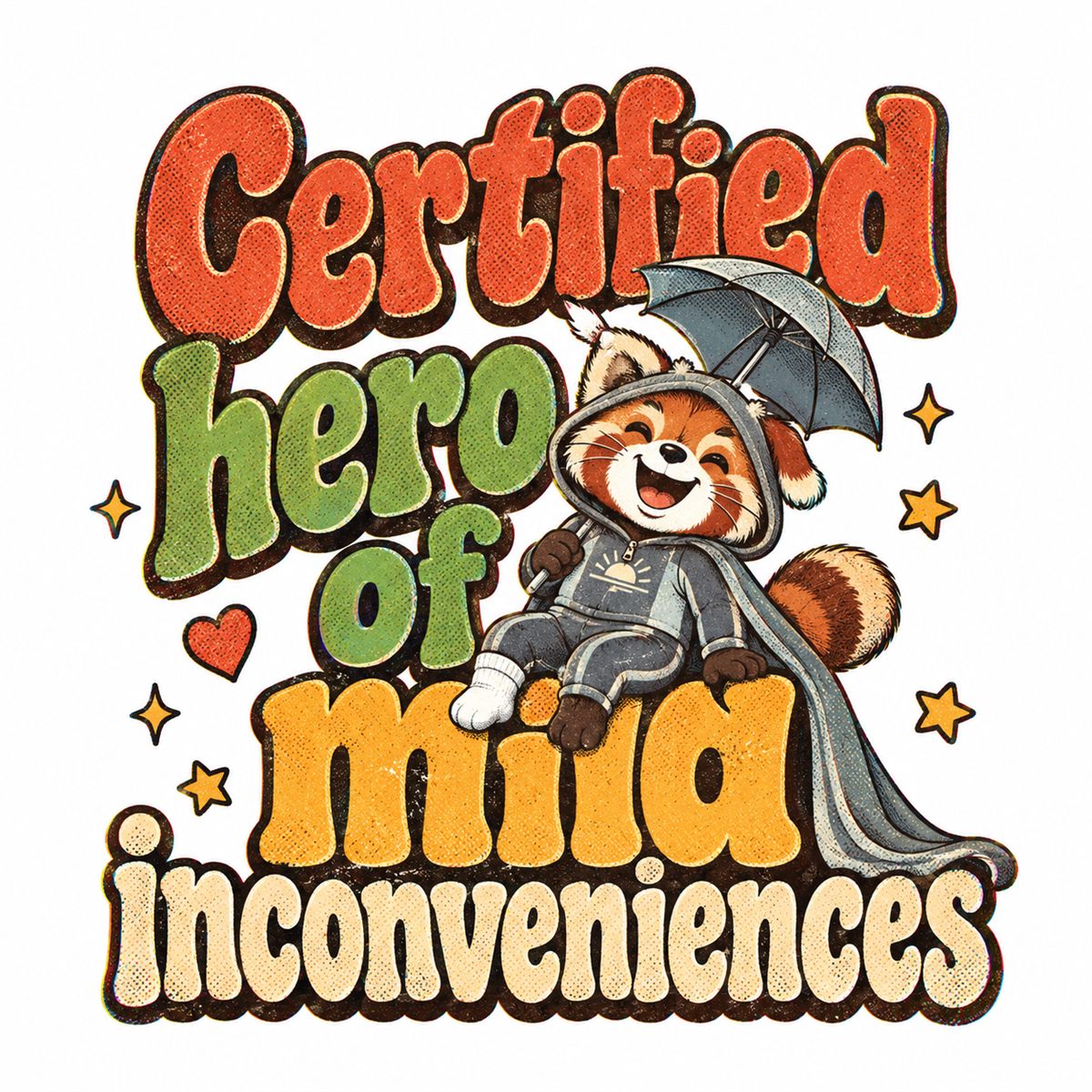
The t-shirt, mug, tote and pin formats each ask for the right thing: flat colours, few of them, bold shapes that still read on fabric and at thumbnail size.
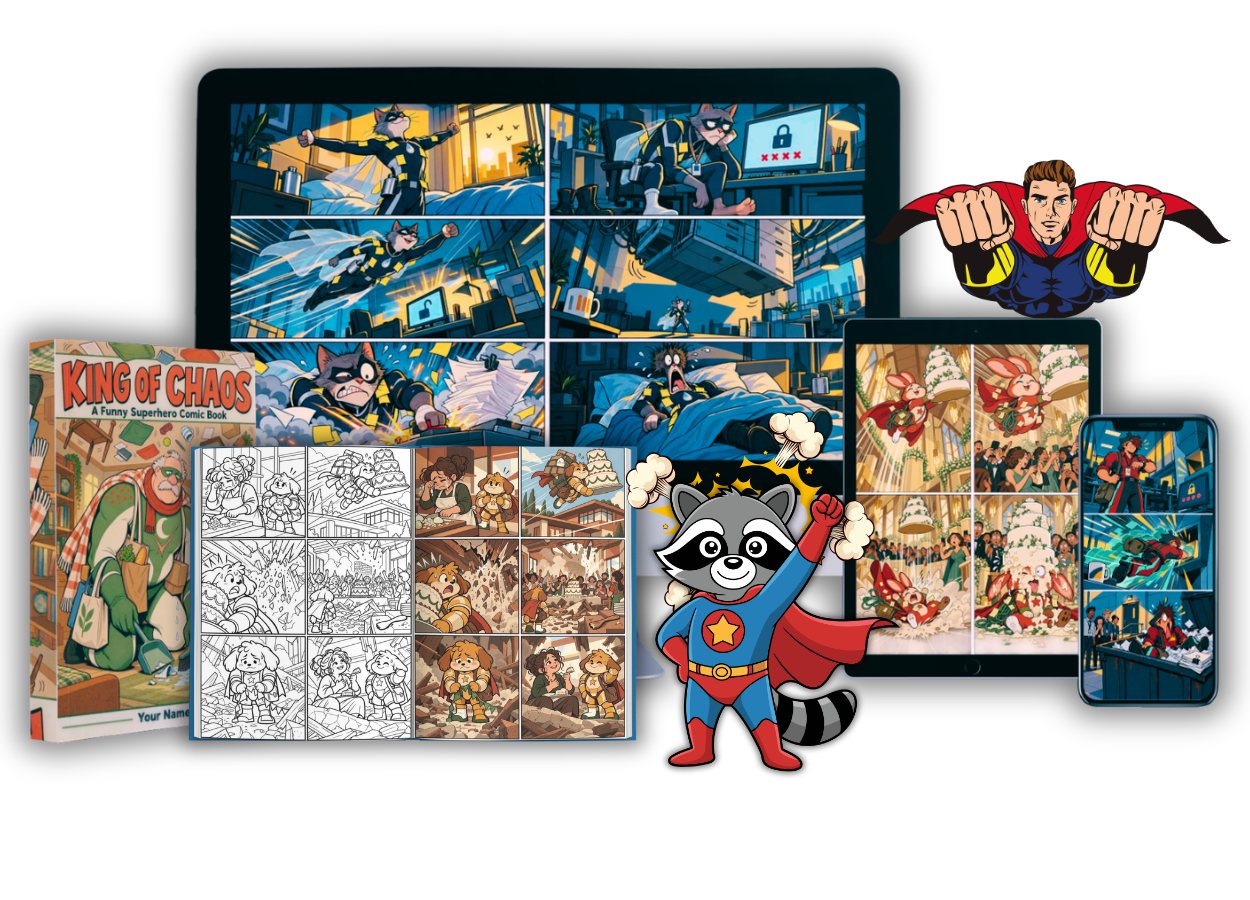
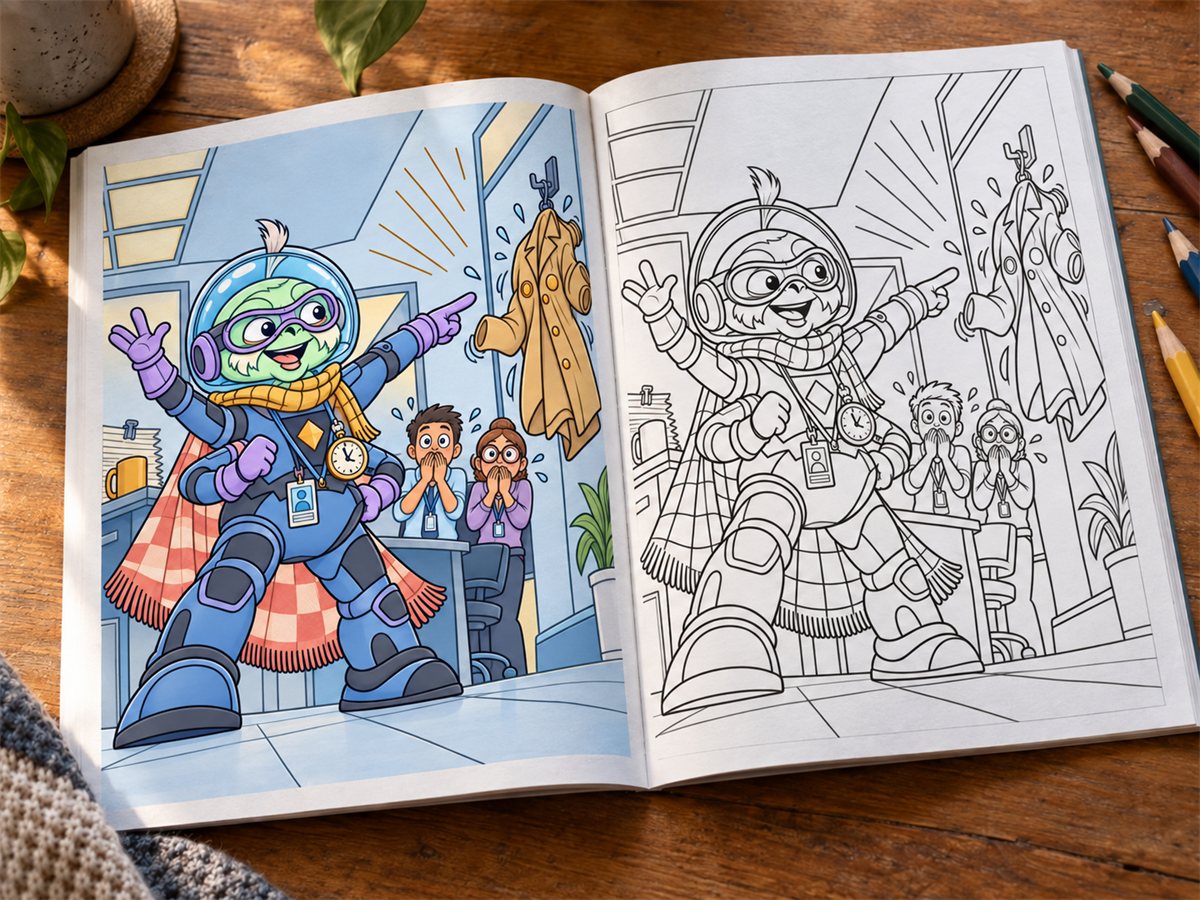
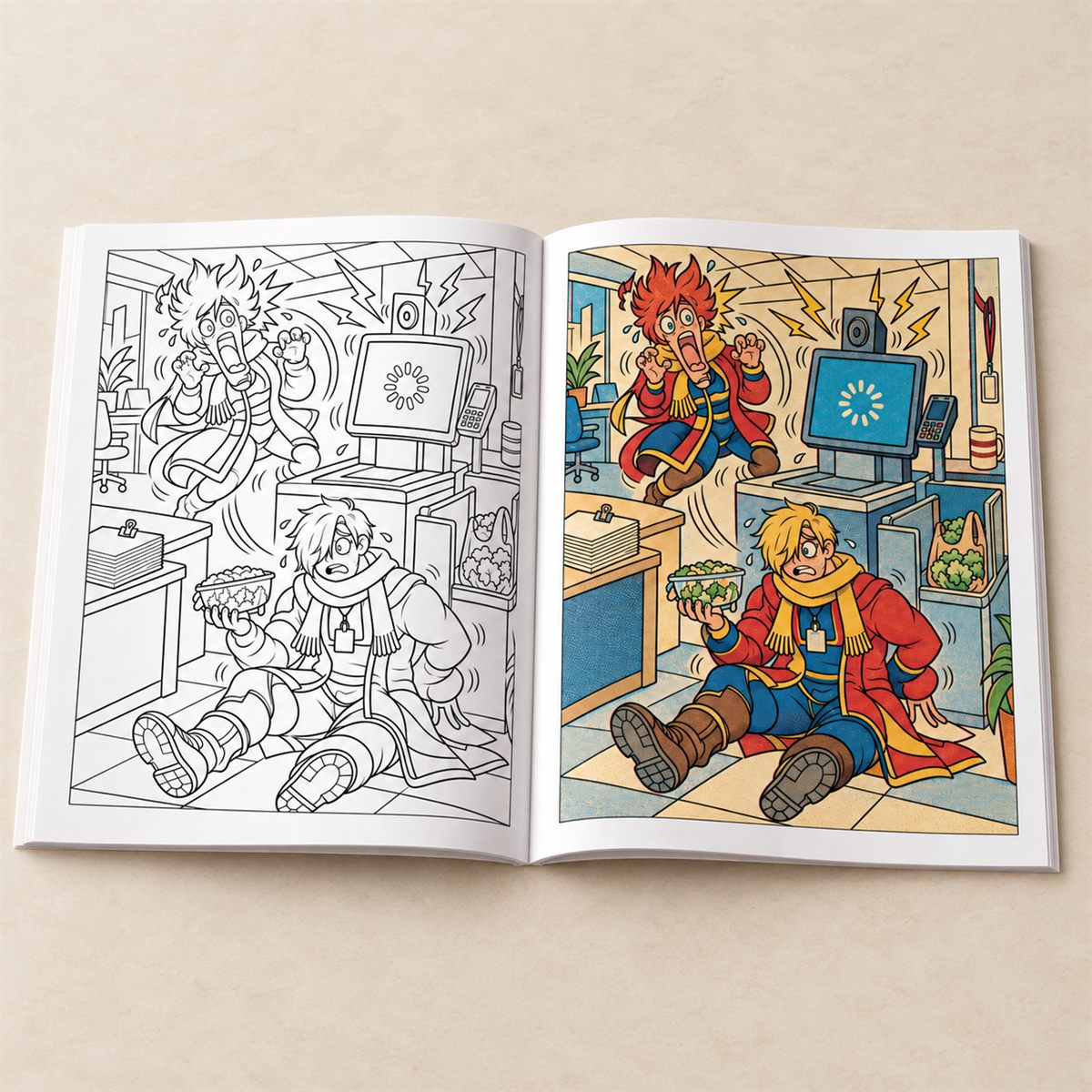
Colouring Page produces clean outlines with no shading and no grey tones. Activity Page comes in eight kinds — maze, spot the difference, dot-to-dot, hidden objects, draw the other half and more. Batch a set around one locked hero and the book looks illustrated by one artist, cover to cover — because it was.
Eight image formats are built in — pins, carousels, feed posts, vertical stories,
thumbnails, avatars, banners. That covers Pinterest, Instagram, Facebook and LinkedIn
completely. A running character with a stupid limitation is a series people follow; a
random funny picture is a single post that vanishes.
And these are comics, not pictures. A feed post can hold a real
four-panel strip, a pin can hold three stacked panels, a story can hold a
before-and-after pair — the shape comic accounts actually post in.
Everything here is a still image. Turning a finished strip into
shot-by-shot prompts for short video is an optional upgrade inside the app — not
something you need to buy to use this.
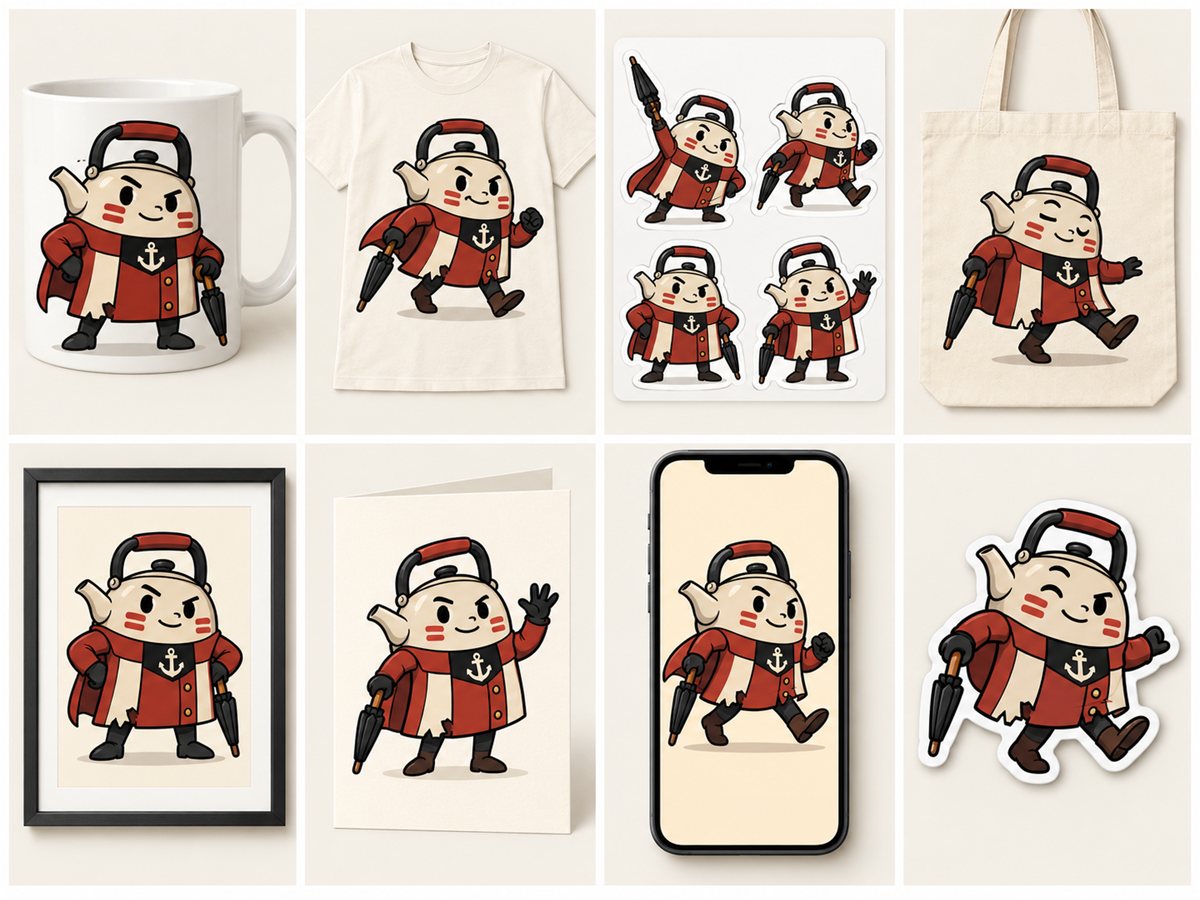
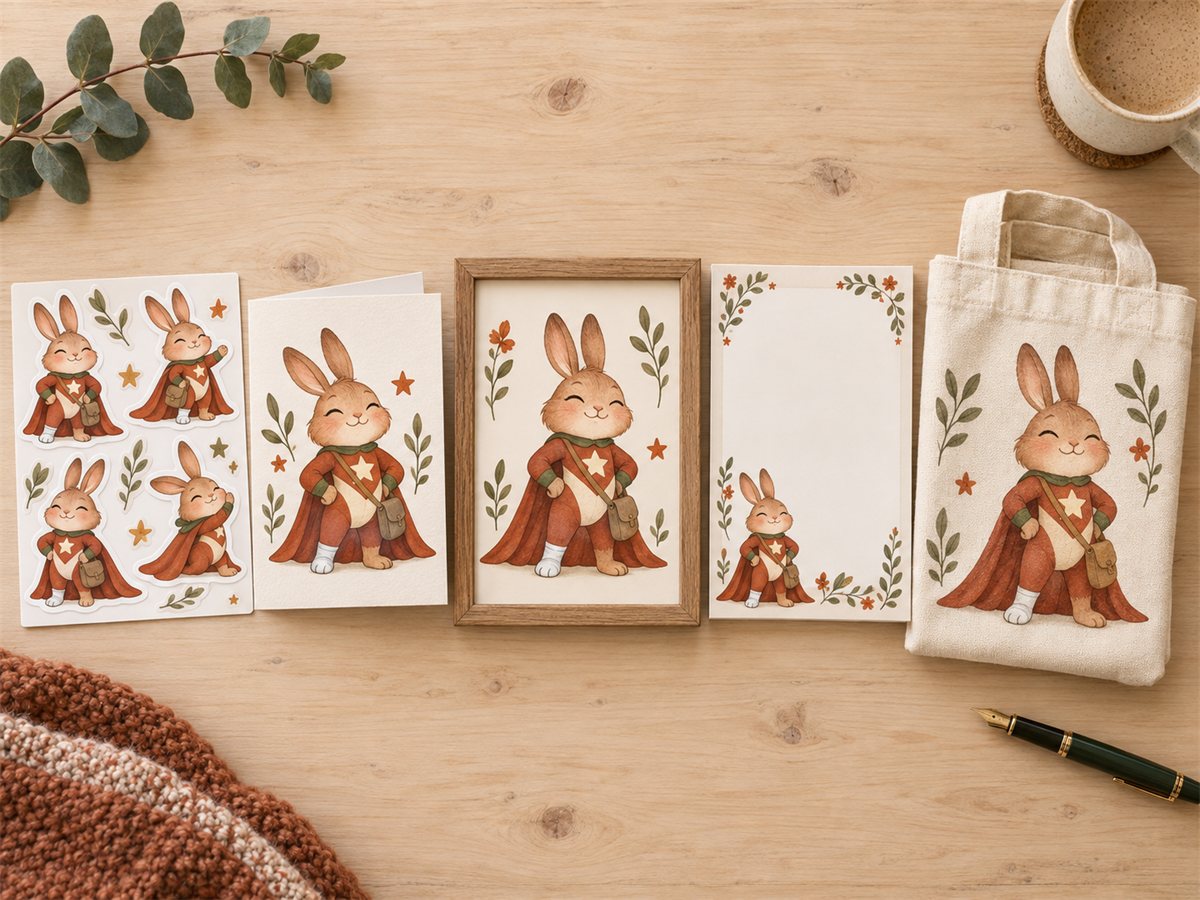
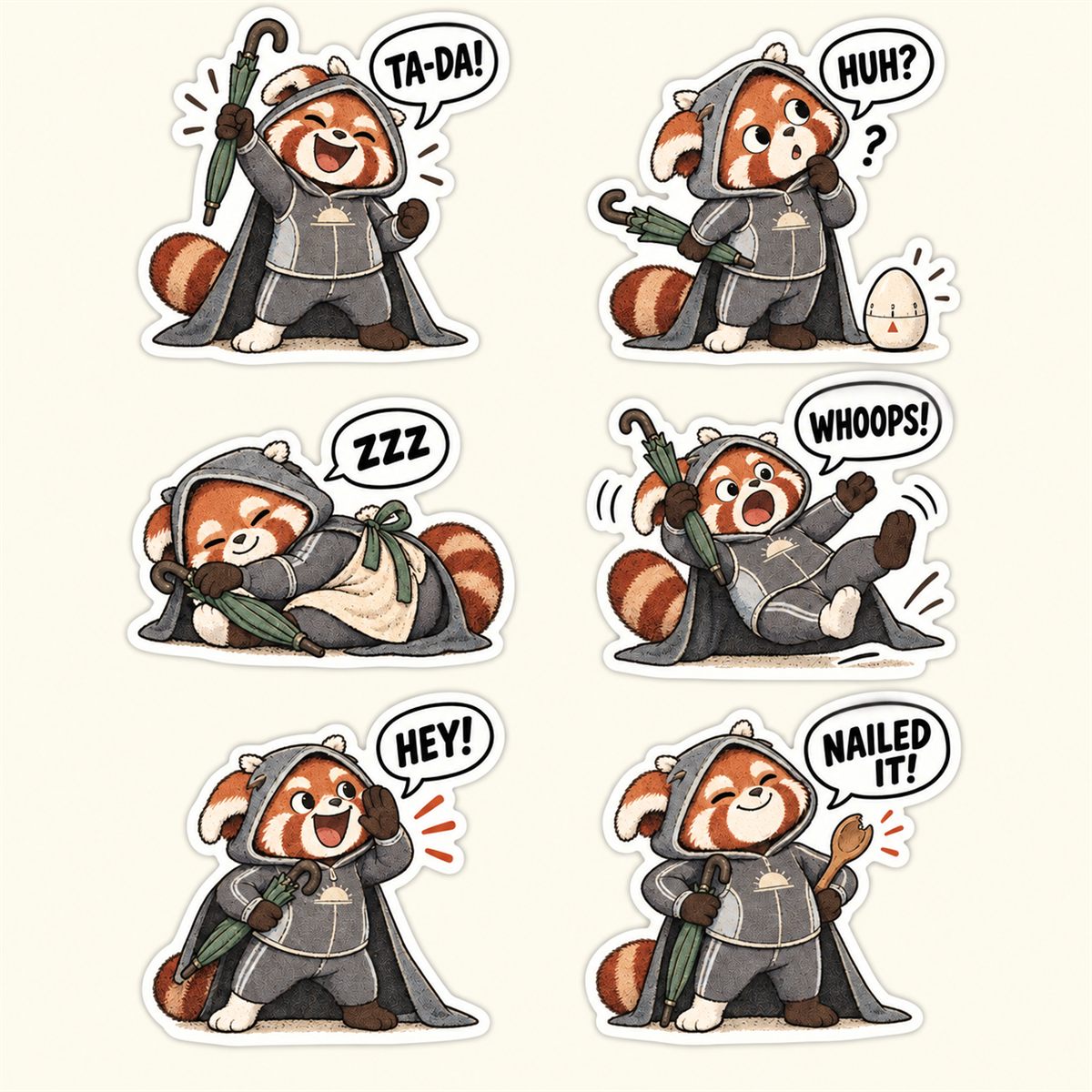
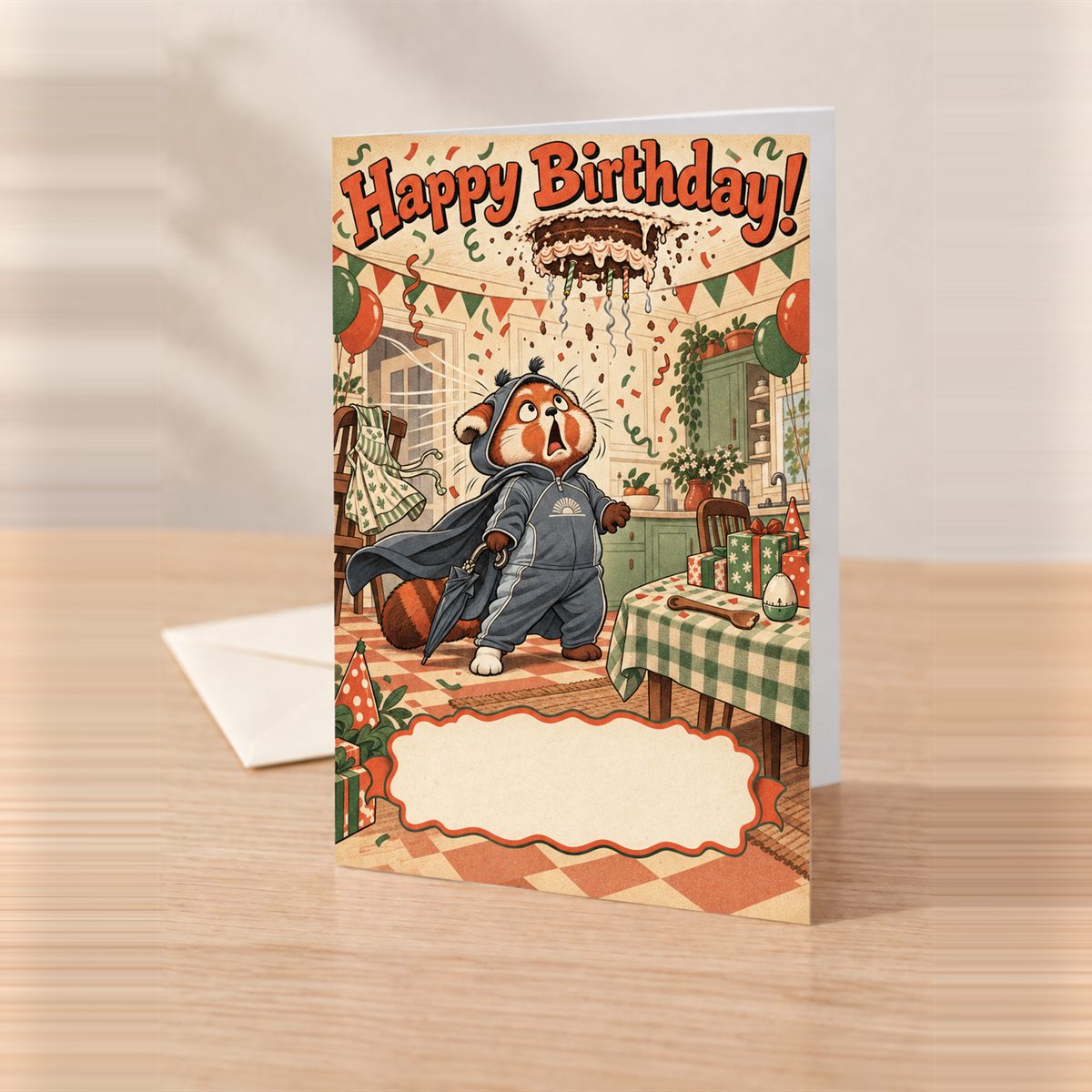
One character across stickers, quote designs, greeting cards for fourteen occasions, seamless patterns and wall art gives a shop people browse instead of glance at. Buyers come back for the character, not the file.
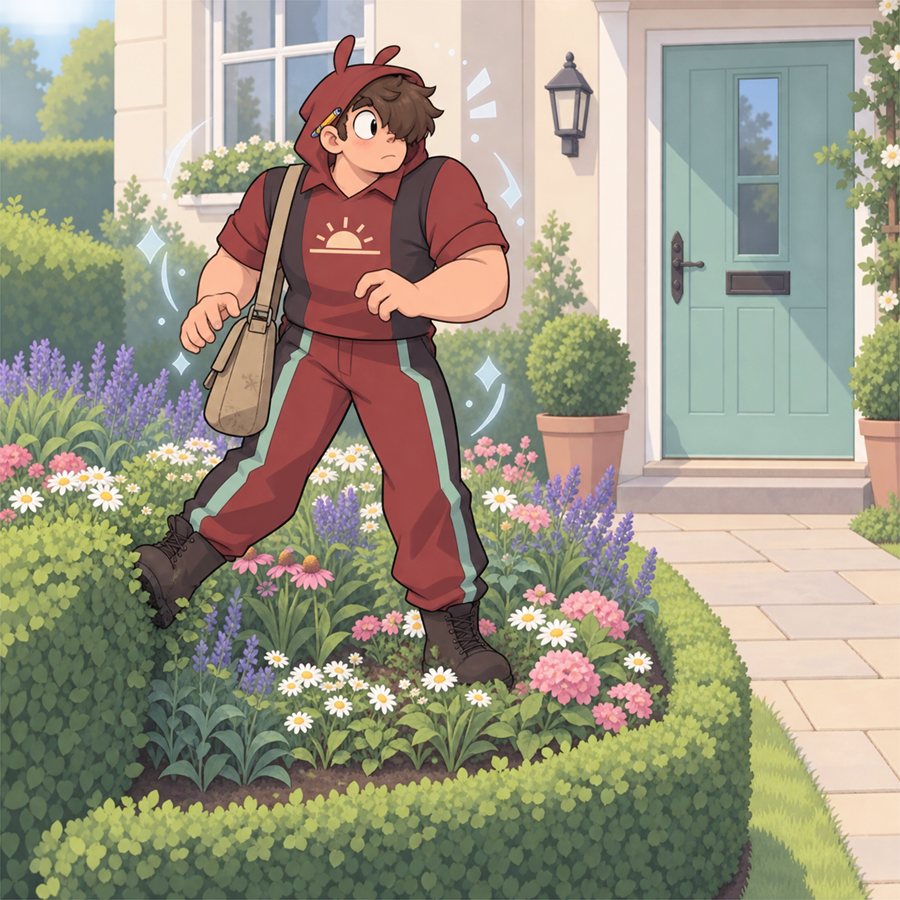
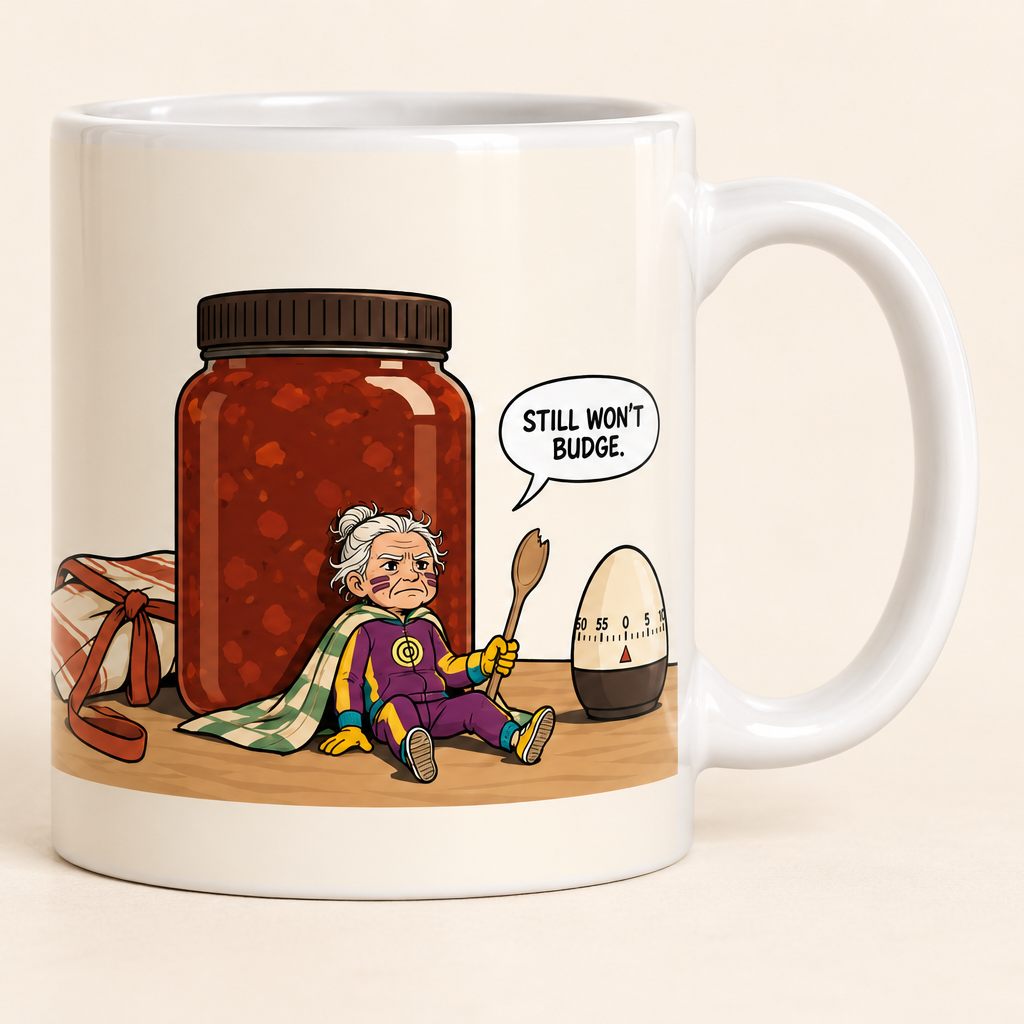
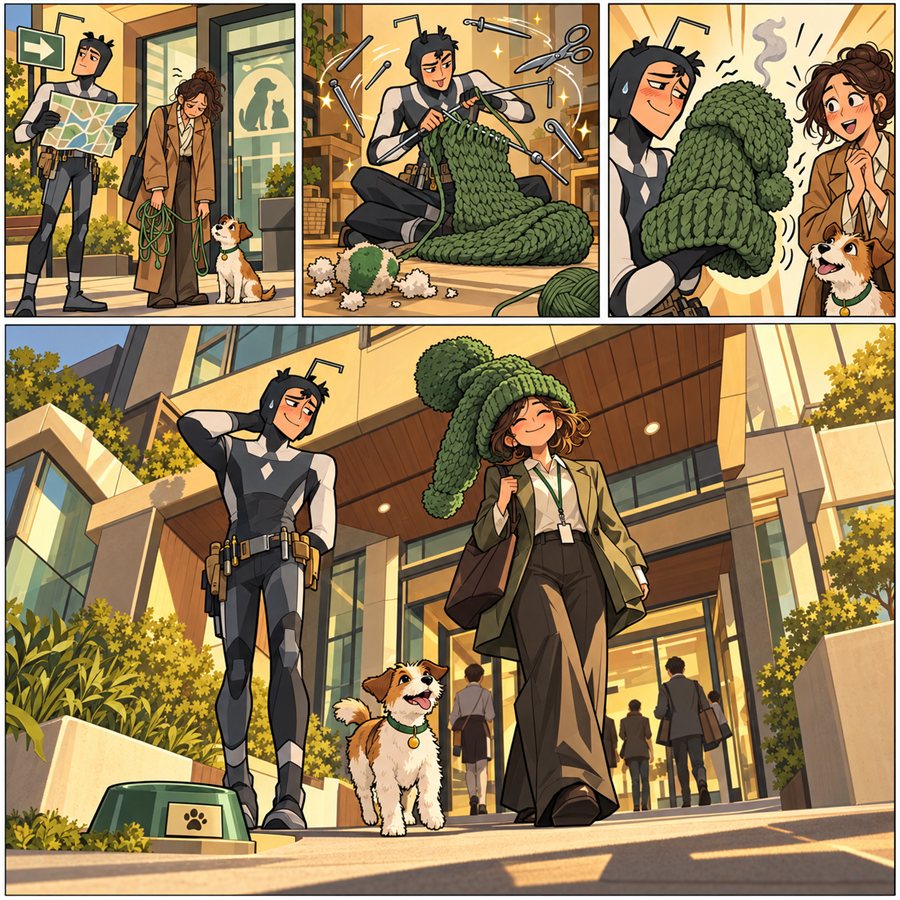
Four different characters above, one per channel — and inside each shot, every single item carries that one character. That is the point. A shop full of one character is a brand; a shop full of unrelated funny pictures is a pile of files.
Superhero comedy sells — but three things kill it
Panel one is a chunky bearded hero. Panel four is a stranger in a different costume. Nobody will follow a comic whose lead keeps being recast — and no shop can build a brand on it.
Red-and-blue suit, a letter on the chest, a bat on the cowl. Superheroes are the single most heavily protected genre on Etsy, and takedowns arrive fast.
You know a funny idea when you see one. Writing four panels that actually build to a punchline, then describing them to a model, is a different job entirely.
The part nobody else does
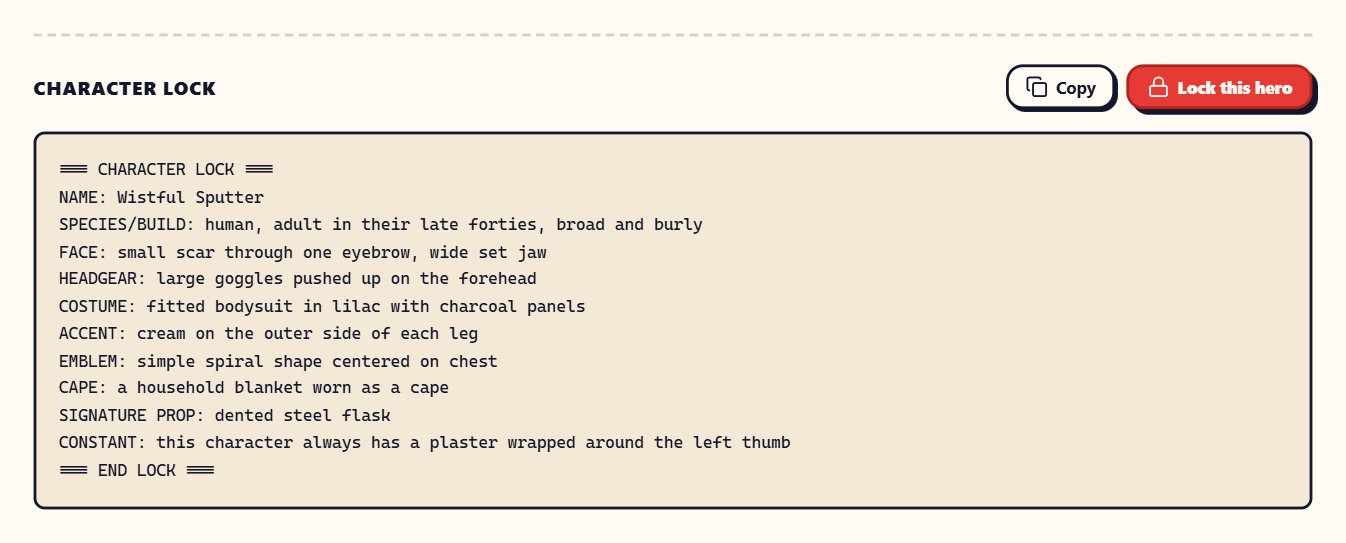
You build your hero once — species, build, face, headgear, costume, cape, emblem, signature prop, three locked colours, and one odd visual detail that becomes their signature. The app turns those choices into a block of plain text:
That block goes into every single prompt the app builds, word for word, never rewritten and never shortened. It is the entire answer to the problem that ruins most AI comics — and it is why your hero survives from panel one to panel four, and from this week's strip to next month's.
The CONSTANT line is the quiet trick: one small visual oddity that image models redraw correctly almost every time. When the face drifts a little, readers still recognise your character by it.
Made with this app
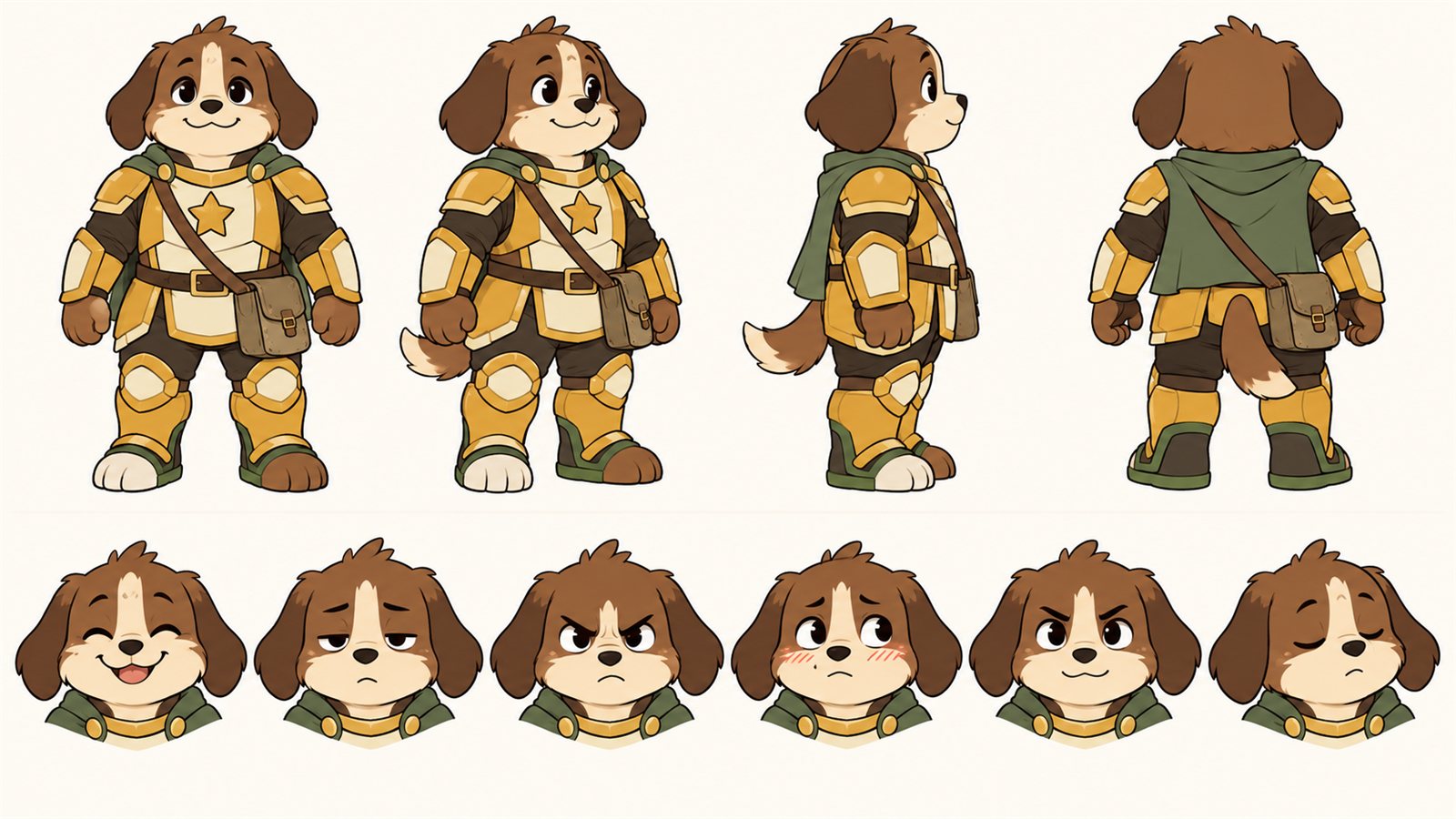
Front, three-quarter, side, back — and six expressions. All from one CHARACTER LOCK block, pasted word for word. Nothing drawn twice, nothing corrected by hand. This is the sheet you keep open beside you while you make the rest of the shop.

Six art styles · one character
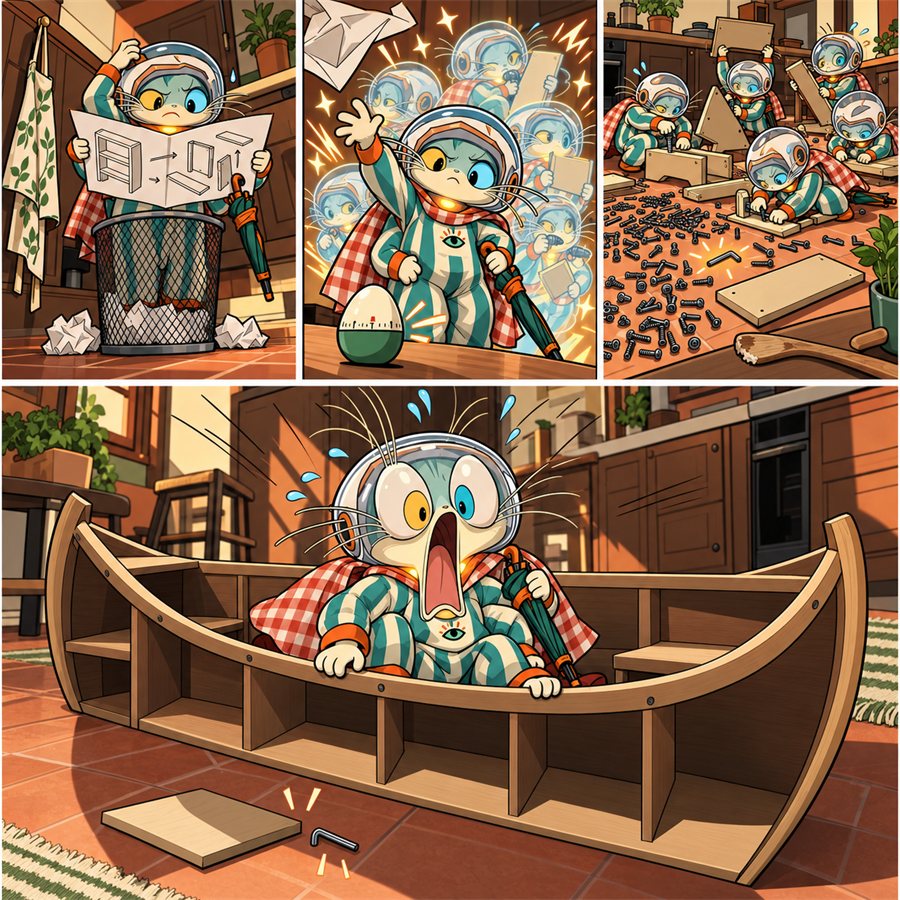
Four arms, two mismatched eyes, one picnic-cloth cape — count them in every panel. Six completely different looks, one character who survives all of them. Pick the style that suits your shop and every product you make matches it.
Elsewhere on this page you will meet six more original characters — an owl, a rabbit, a red panda, a small boxy robot, a very determined pensioner and one ordinary human. Every one of them was built in this app, from the same lists you get.


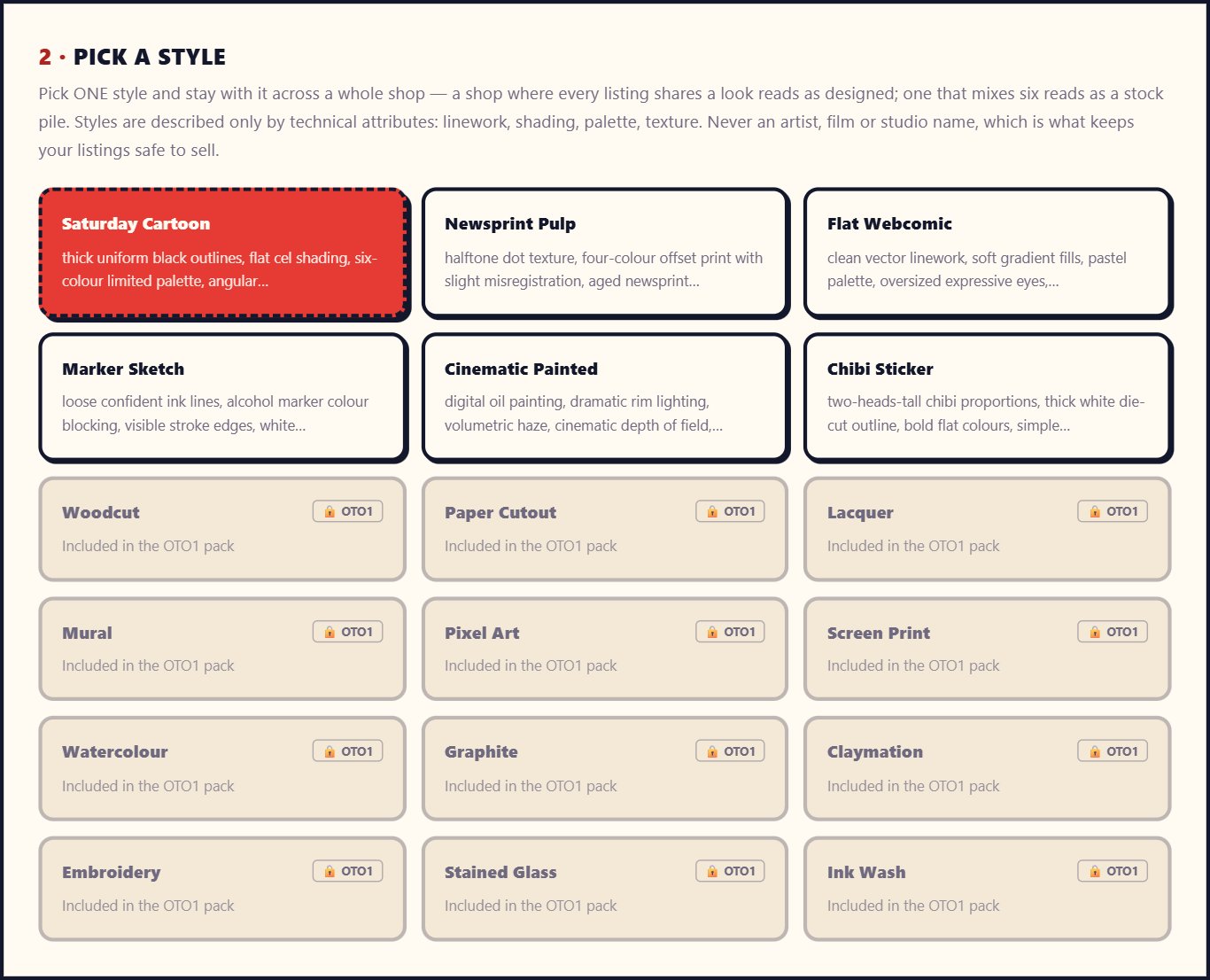
Every style is described to the model by technical attributes only — linework, shading, palette, texture. Never an artist, a film or a studio. Twelve more styles come with the upgrade.
Everything working together
The screen asks you for what they can do and the stupid catch that comes with it, then draws the entire look — face, costume, cape, emblem, colours, signature prop — with one button. Twenty fields underneath if you want them, and your own wording allowed in twelve, so your hero is genuinely yours rather than one of a thousand identical ones.
Each one is a three, four, five or six-beat machine built for a specific shape of ending — the power working too well, the ordinary object winning, the epic build-up over something trivial, the tender misfire. Five or six ready-made gags in each, and the four that suit your hero suggested at the top.
Standard, Tender, Epic Trivial, Contrast and Mystery. The rhythm decides the shape of the punchline and gives every panel its own camera angle — which is what makes a strip read like a comic instead of four unrelated pictures.
Powers are not funny. Powers with a stupid condition attached are. Twenty limitations, each written as a visible consequence the model can actually draw — not a rule it will quietly ignore.
Every style is described only by technical attributes — linework, shading, palette, texture. Never an artist, a film or a studio. That is deliberate, and it is what keeps your listings safe to sell. Seven formats take real panels, so a comic can be a feed post, a pin, a story or a poster — not only a comic strip.
Quote designs and posters get your quote in big, bold, colourful lettering with your hero acting it out. Memes get top and bottom captions. Greeting cards get the greeting, a pretty blank label to write in, or both. Thirty quotes and twelve meme ideas are ready to go — or type your own.
Tell it whether you paste into ChatGPT, Gemini or Midjourney. Midjourney gets its own parameters and every word removed — it cannot spell — while ChatGPT and Gemini get the lettering spelled out exactly.
Pick from 20 languages and the words inside the picture come out in that language — speech bubbles, sound effects, the big lettering on a quote design. The prompt itself stays in English, because that is what the image models draw best from. For languages that do not use Latin letters, the app tells you to check the spelling before you sell — it will not pretend AI gets that right.
Your heroes and your best prompts live in your account, not in one browser. Sign in from the laptop, carry on from the desktop. Clear your cache and lose nothing.
See it in action
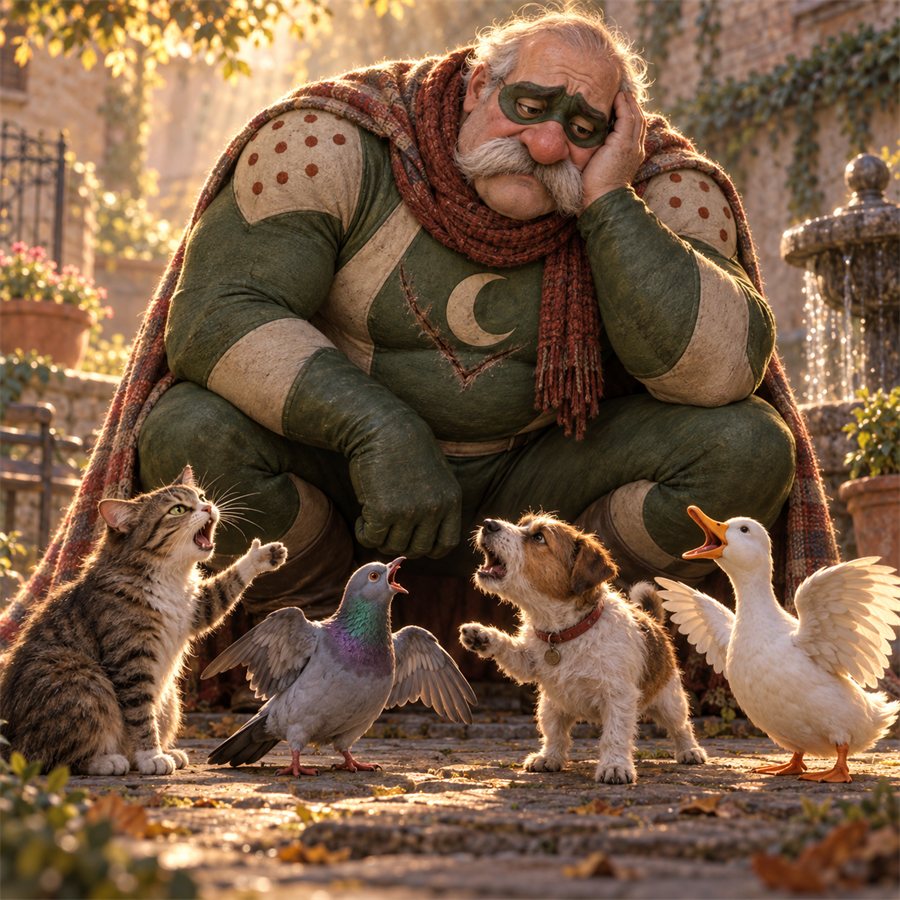
Two real choices: what they can do, and the stupid catch that comes with it. One button draws the whole look.
Power talking to animals ·
The catch but they only ever complain
What that looks like in the picture: surrounded by animals all complaining at once, ears flat, thoroughly told off
You do not scroll through fifty-nine. The app puts the four that suit this hero at the top and says why. One click and the step is done.
This time's gag: a cup of coffee → the cup comes back perfectly, the coffee does not · 🔀 Another gag
Want the whole library? One line underneath opens it: Browse all engines — 59 in your packs.
35 formats, grouped by where you sell — the same joke becomes whatever that platform wants.
Comic StripQuote DesignSticker SheetMug DesignFunny Greeting CardMeme PanelActivity PageLettering: Sound effects only Dialogue + sound effects No text
The real app screen — pick options, the prompt updates as you go, then copy it.
One joke, many products
Each format changes the aspect ratio, the layout and the print instructions in the prompt. A mug design is not a comic strip with a different crop, and a Pinterest pin is not a mug design turned sideways. The app groups them exactly like this, so you only ever look at your own shelf.
Pinterest Pin · Carousel Slides · Story / Vertical Post · Video Thumbnail · Profile Avatar · Channel Banner · Meme Panel · Social Post
Sticker Sheet · Quote Poster · T-Shirt · Mug · Tote · Fridge Magnet · Enamel Pin · Bookmark · Notebook Cover · Greeting Card · Party Invitation · Postcard · Nursery Print · Phone Wallpaper · To-Do List · Chore Chart · Meal Planner · Calendar Month · Award Certificate · Quote Design · Seamless Pattern
Book Cover · Activity Page (8 kinds: maze, spot the difference, dot-to-dot and more) · Low-Content Journal Page · Colouring Page
Comic Strip · Model Sheet — the four-panel strip everything else is reshaped from, and the reference sheet that keeps the face stable


Words sell. Pick Quote Design and the app writes your quote in chunky, colourful hand lettering and poses your hero acting it out — no comic, no clutter, ready for a mug or a shirt. Thirty funny quotes are built in, or type your own. Greeting cards work the same way: choose the occasion, get a joke that belongs to it — the birthday cake dive, the chimney stuck halfway — plus the greeting and a blank label to write in.
And printables are the quiet money. To-do lists, chore charts, meal planners, calendars and award certificates — finished digital products you list once and sell forever.
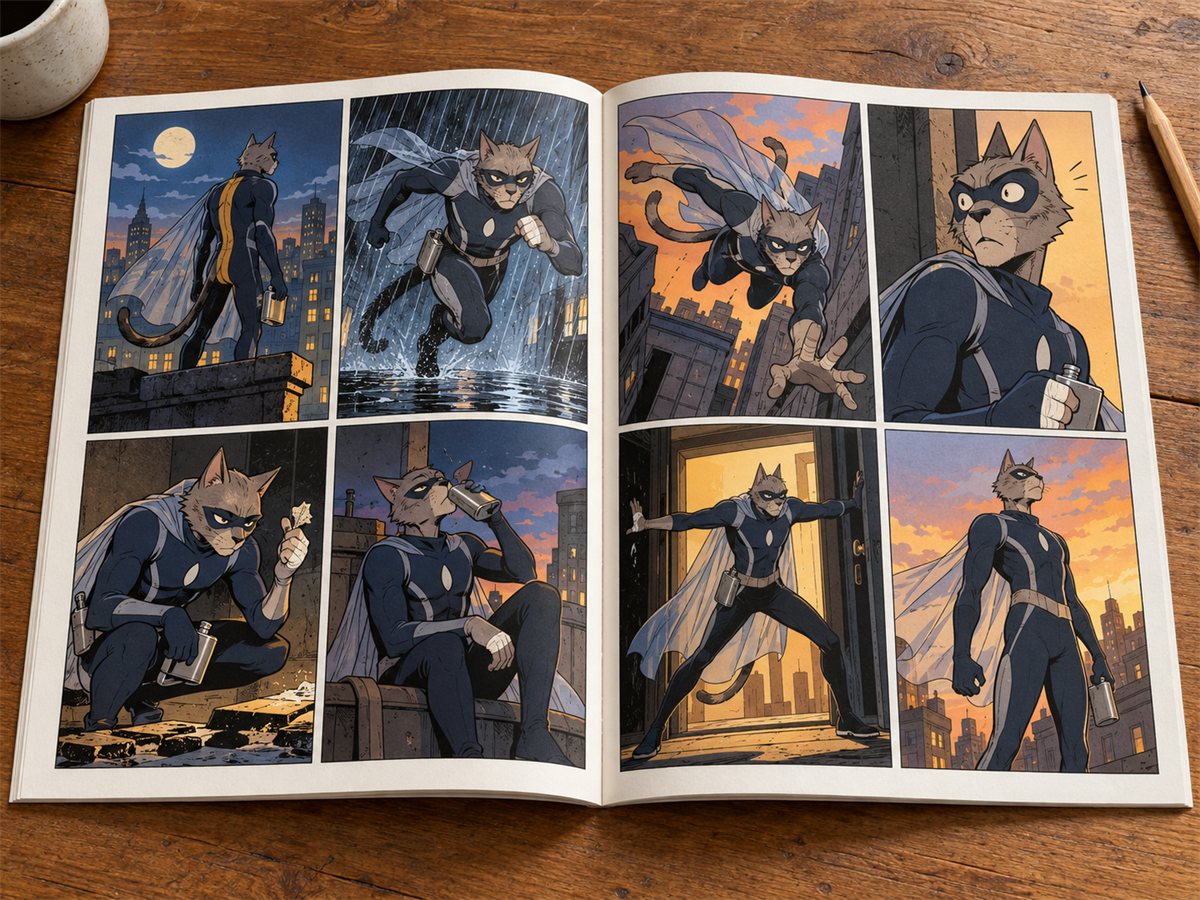
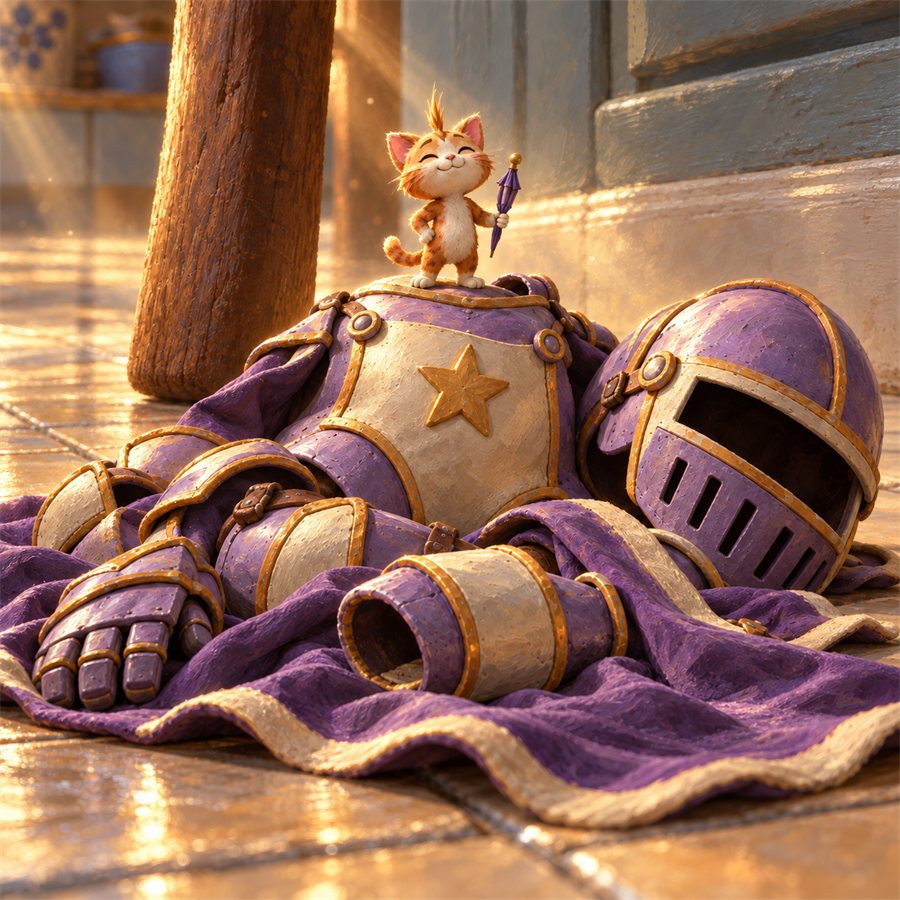
Seven formats above, seven different characters — a cat, a pensioner, a living kitchen object, a red panda, a rabbit, one ordinary human and a small armoured dog. Whatever you build, all seven formats are waiting for it.
Built for people who post
A feed post used to mean one drawing. Now it can be a real four-panel strip in one square post, or a three-panel vertical pin, or a before-and-after pair in a story. That is the native shape of every comic account you already follow — and now it is one dropdown.
Eleven panel layouts, and seven formats accept them: comic strips, social posts, Pinterest pins, vertical stories, carousels, posters and colouring pages. The app only offers you the ones that stay readable at the real size of what you picked — four panels on a pin, yes; six panels shrunk into a thumbnail, no.
Set your character up once. Press Make a month and the app writes thirty prompts in one go — a different joke engine and a different gag in every single one, all in the same character, the same style and the same world.
The first seven are seven different engines, never the same joke twice in a row. Copy them all with one button and work through them whenever you like. There is a seven-post version too, if a week at a time suits you better.
It writes the image prompts, not your captions — and it does not post for you. You paste each prompt into the AI you already use, and you decide when anything goes out.
How it works
Pick a power and its catch — or hit Surprise me twice and change what you care about. Press Lock this hero. You only ever do this once per character.
Take one of the four engines suggested for this hero. The app writes the strip out in plain English before you generate anything: if it does not make you smile, shuffle for another version.
Say which AI tool you use and how much lettering you want — sound effects, dialogue, or none. Copy the prompt, paste it, list the result.
Built to protect your shop 🛡️
Most prompt packs quietly tell the model to imitate a named character or artist. That is the fastest route to a takedown. This app does the opposite, and it does it where you can see it happening:
This tool reduces risk; it is not legal advice. AI image rights and marketplace rules vary by platform and country. Review the terms of your AI tool and your selling platform, and editing your images before selling is strongly recommended.
59 joke engines in the front end
A joke engine is not a theme or a caption. It is a machine of three, four, five or six beats that builds to one specific kind of punchline. Six of them, drawn — six different characters, because the engine is what changes, not the hero:


And here are twelve more of the fifty-four, by name:
You never write a beat yourself. Pick the engine, and the app fills in your hero's name, power, cape, signature prop, limitation and the situation — with a specific gag, a sound effect and a different camera angle on every panel.
New — the whodunit engine
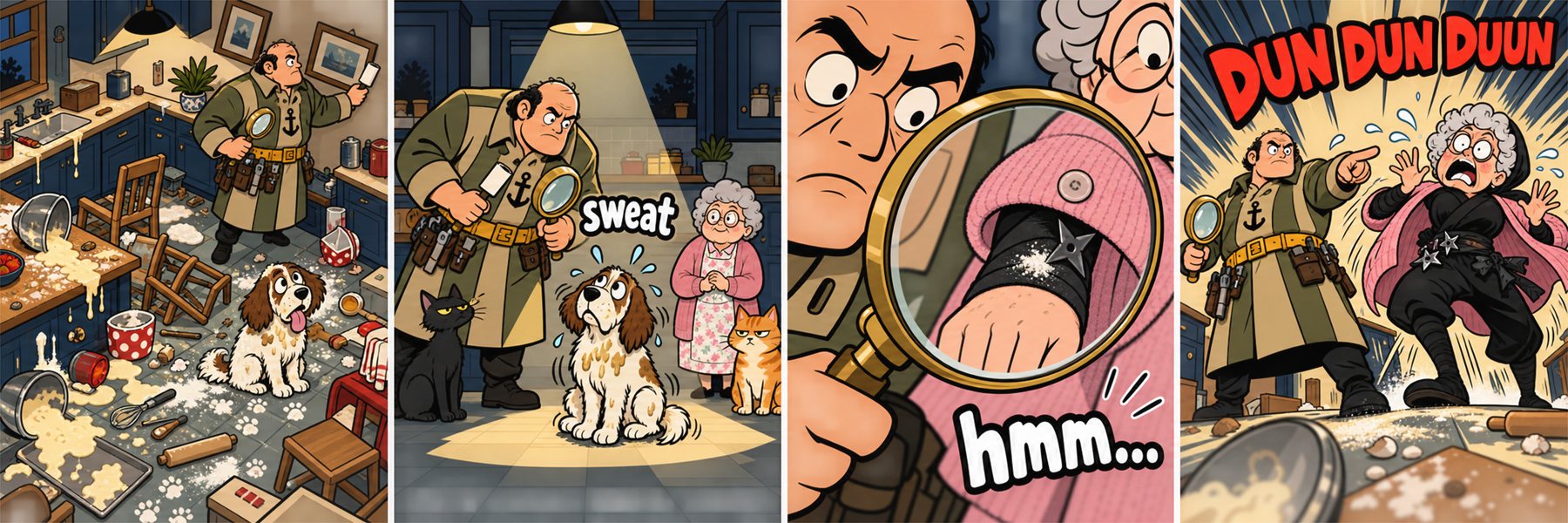
Detective comedy is its own genre, and it sells: a tiny crime investigated like the end of the world, a line-up of guilty faces, one absurd clue, and a reveal nobody saw coming. Five joke engines and a full detective theme pack are built in — same hero, same CHARACTER LOCK, a completely different kind of strip.

That strip started as this — the app writes the case out in plain English first, so you can tell whether it is funny before you generate anything:
Hero: Cobweb Lozenge, a compulsively tidy plumber who can turn invisible — but his clothes cannot.
🔀 Another case — five cases in this engine alone, and the same button reshuffles every other engine too.
Every case runs through the same CHARACTER LOCK, so the detective in panel four is the hero you built in panel one — and the same hero can go back to burning the toast tomorrow.
Real output, not a mock-up
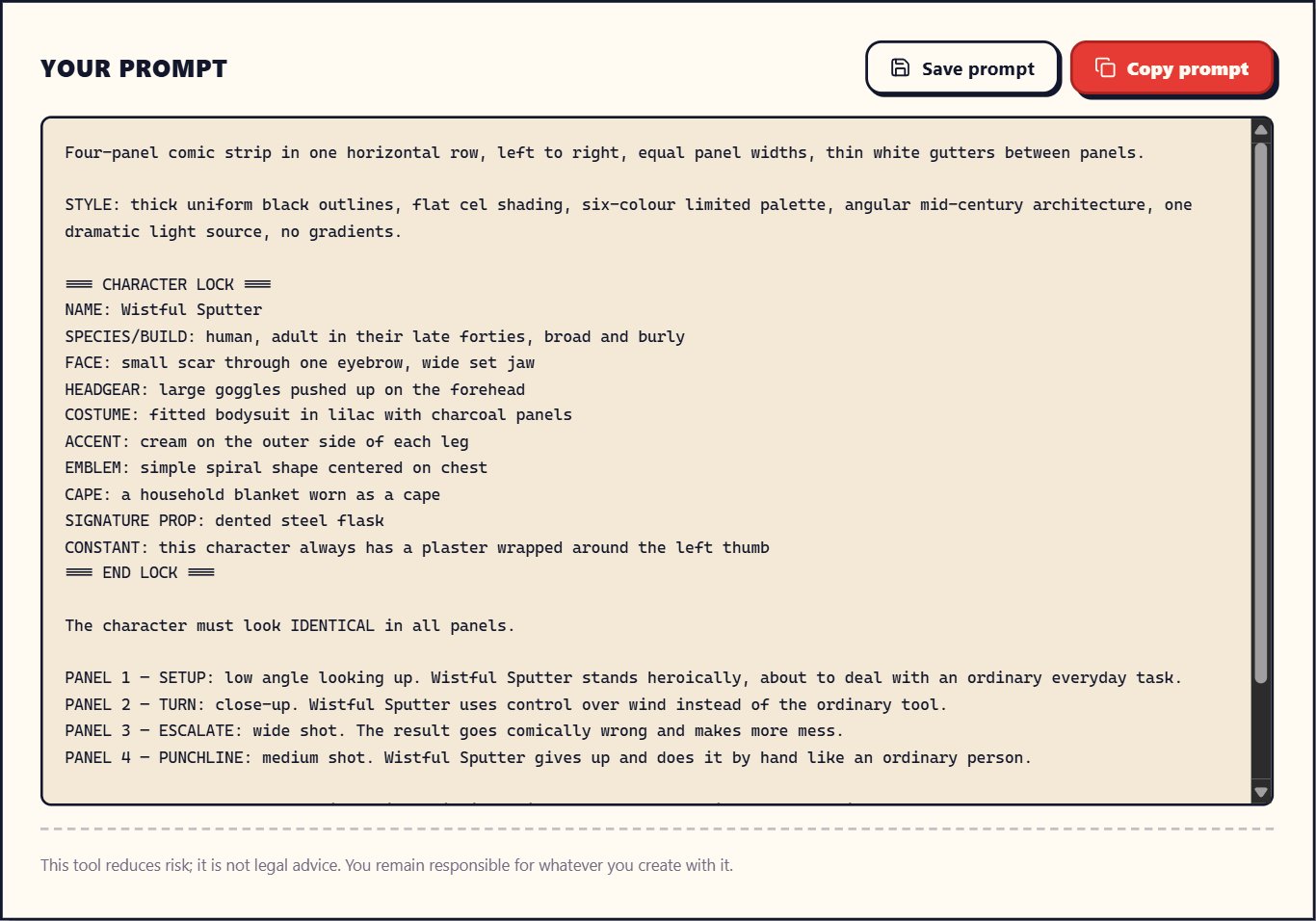
Two complete prompts, generated by the app, nothing trimmed. Same hero in both — look at the CHARACTER LOCK block: identical, word for word.
4-panel comic · office life · sound effects · ChatGPT
Quote design · for mugs & shirts · ChatGPT
Look at what the app did without being asked. On the left: a specific gag, a sound effect on every panel, a different camera on each, and a punchline face. On the right: a quote design is not a comic, so it dropped the story, dropped the office, wrote the quote as big bold lettering and asked your hero to act it out.
See the difference
| Hero Comic Prompt Studio | Prompt packs | Hiring an artist | Writing it yourself | |
|---|---|---|---|---|
| Same character every panel | ✓ CHARACTER LOCK | ✗ | ✓ | ✗ |
| Jokes built around your character | ✓ job · flaw · fear · power | ✗ | ✓ | If you can write comedy |
| Ready-made gags to shuffle | ✓ 300+ | A few | — | ✗ |
| Time per strip | Seconds | Minutes | Days | Hours |
| Cost | One-time | Varies | $$$ each | Your time |
| Name blocklist built in | ✓ 902 entries | ✗ | Depends | ✗ |
| Never names an artist or studio | ✓ | ✗ often | — | ✗ |
| Product formats | 35 | Usually 1 | Extra $ | ✗ |
| Works with your AI tool | ✓ ChatGPT · Gemini · Midjourney | Usually 1 | — | — |
| Monthly fee | None | Varies | ✗ | — |
Order today and also get
None of these are filler, and none of them are a list of niches you could have googled. Each one removes a real roadblock between “I bought a tool” and “that strip is good enough to list”.
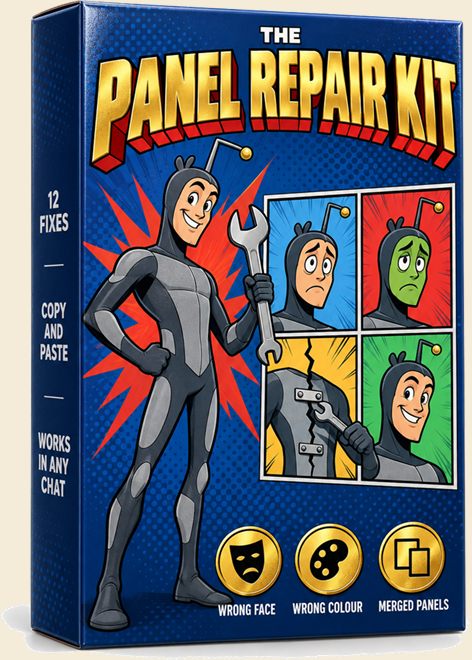
Twelve copy-paste fixes for when your image tool gets it wrong. Panel 3 drifted into a different person. The costume changed colour. The speech bubble is misspelled. The four panels merged into one picture. Each one is a prompt you paste into the same chat — you fix the panel instead of starting again.
💲 Value: $27
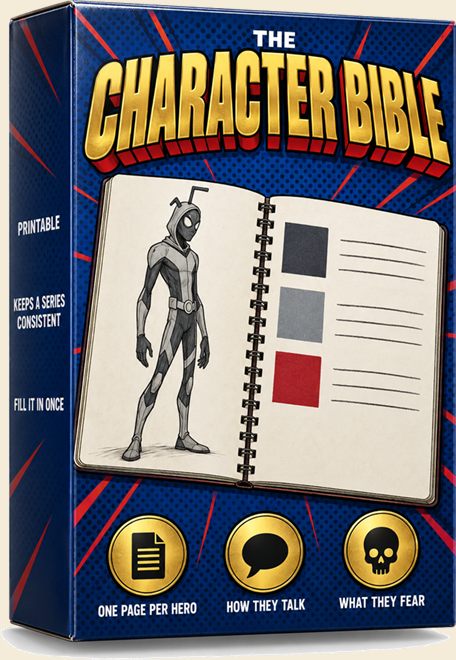
The app locks how your hero looks. Nothing locks how they behave — and that is what makes a series feel like one series. A printable page per hero: the lock block, the three colours, how they talk, what they are secretly proud of, and which limitations you have already used.
💲 Value: $17
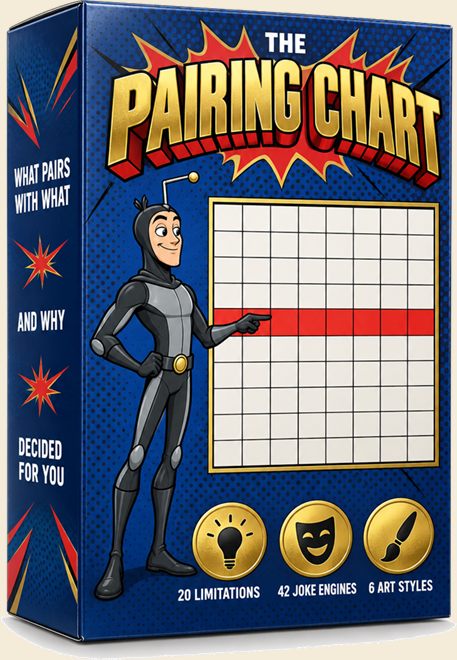
All twenty limitations, each matched to the joke engines that suit it — and why. Plus which of the six art styles sells into which market, and what each of the four story rhythms is actually for. The two decisions that make a strip land, decided for you.
💲 Value: $17
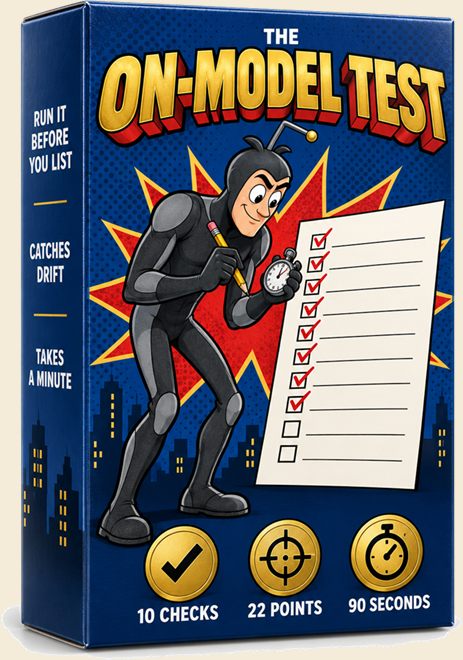
Ten checks, twenty-two points, ninety seconds. Run it before you list anything. Cover the costume — is it still the same person? Cover the speech bubbles — does the joke still land? A shortened version of the checklist this app was built against.
💲 Value: $19
Total bonus value: $80 — yours free today.
Here is everything you get today
Want more? Optional upgrades inside
These unlock automatically inside the app when you sign in. You can see every one of them in the interface from day one, priced and labelled — nothing is hidden from you.
Build worlds the library does not have. Make your own theme pack from your own trade, cross any two packs into one scene, and add a STYLE LOCK so the drawing stops changing between weeks — plus 8 more theme packs, 12 more art styles and 14 more joke engines.
A second locked character, and a third lock. Lock who they are to each other — 12 relationships — and lock how the two bodies relate, so one of them is not a head taller in panel one and the same height in panel three. Plus 6 two-hander engines and 5 formats built for pairs.
Turn a pile of jokes into a series people follow. 10 story arcs of twelve strips, and a thread — a mug that chips, a plant that grows — that changes a little in every one and is never mentioned. Every strip still works on its own.
Your character teaches a real lesson — and still gets the joke wrong. 10 lesson engines, 10 science topics with 68 things to explain, and 20 safe kitchen-table experiments. Every fact is true at primary-school level, which is the part nobody else gets right. Child-safe mode and colouring pages included.
Use it for a full 7 days. If it does not help you build a consistent character faster than you can by hand, email brainoreviewer@gmail.com for a friendly refund. All the risk is on us.
Frequently asked questions
No — it creates the prompts. You paste them into your own AI image tool: ChatGPT, Gemini, Midjourney or anything else. That is exactly why there are no API keys, no image credits and no monthly fee. You own the tool and you choose the artist.
No. It runs in any modern browser. You sign in with the email you bought with and your licence key, and your heroes and saved prompts live in your account — so you can carry on from a different computer without copying anything across.
Yes. Your characters and prompts are stored in your account rather than in one browser, which is what lets you move between computers and survive clearing your cache. That does mean the app needs an internet connection to run.
That is the entire point of the copyright layer: original characters, styles described only by technical attributes, and a 902-entry blocklist on names. But AI image rights and marketplace rules vary by platform and country — review the terms of your AI tool and your selling platform, and edit your images before selling.
The CHARACTER LOCK is the strongest tool available for this outside of training your own model, and it is why the app exists. Image models still drift on long conversations — when that happens, ask your tool to redraw that one panel and paste the lock block again. The app tells you this in its built-in guide.
You don't have to. Once your hero is locked, the app puts the four engines that suit them at the top — based on their power, flaw, secret fear, day job and age — and says why in one line. Pick one, hit Another gag until it makes you laugh, and carry on.
No. Set your character up once, then press Make a month and the app writes thirty prompts in one go — a different joke engine and a different gag in each, all in the same character and the same world. One button copies the lot. There is a seven-post version for working a week at a time. It writes the image prompts, not your captions, and it does not post anything for you.
The app spells out every word exactly and keeps them short, which is what ChatGPT and Gemini handle best — most of the time the lettering comes out right. Always read it before you list. Midjourney cannot spell, so for Midjourney the app leaves a clean blank space instead, ready for you to add the words in Canva.
Five at once, and you can free them up yourself from the Account page — no emailing support because you changed laptops.
No. It writes prompts for still images — 35 formats of them, from Pinterest pins to KDP activity pages. Turning a finished strip into shot-by-shot prompts for short video is an optional upgrade, priced and labelled inside the app. The front end is complete without it.
Build as many as you like — they sit in a row across the top of the studio and you switch between them with one click. Select one and a Delete button appears next to it. Deleting a character never touches the prompts you already saved: they keep their full text.
No. The front end is a complete product: 59 joke engines, 35 formats, 6 styles and 4 theme packs. The upgrades are visible inside the app with their price on them, so you can decide later — or never.